Split Up in Economy, Reunited in Business: How Our Seating Problem Became an Upgrade
Listen to this post · 5 min
Read aloud by a synthetic voice.
My partner and I couldn't sit together in economy. A few minutes later we were sitting together in business class. Here's what happened, why an airline would do this, and what you can take from it on your next trip.
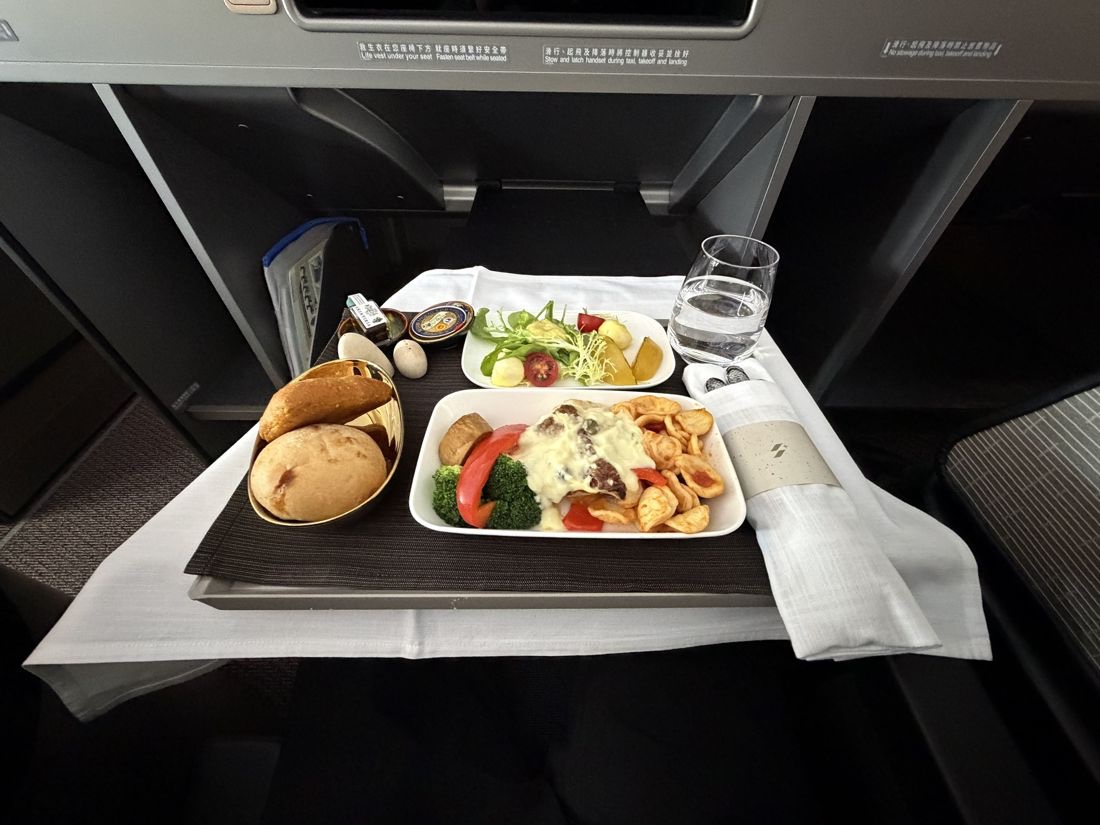
Main course in business: steak with cream sauce, orecchiette, salad and warm bread. Our economy tickets didn't include any of this.
The moment
We'd booked economy for a couple trip like most people do: cheapest fare, seats picked "later." Later never came. At check-in the agent told us the flight was full and the only seats left were apart, several rows from each other. We said that was fine, since it's a few hours and we'd see each other at baggage claim. We were tired and mostly hoping for a window seat.
The agent typed for a while, looked at the screen again, and handed us two new boarding passes. Same flight, same row, both in business. There was no speech and no upsell. The only explanation was a smile and "You can sit together now."
The rest is in the photos: tablecloths, real cutlery, warm bread, a steak we didn't pay for, and a fruit and yogurt course that felt like a nice hotel breakfast. Even the wet towel came in a designer collaboration packet. We clinked water glasses like it was champagne.
Why would an airline give away a business seat?
It looks generous, and it was. But it also makes business sense, and knowing why can help you as a traveler.
1. An empty seat earns nothing once the door closes. Airlines manage seats like perishable stock. If business isn't full at departure, those seats are worth zero. Moving someone up costs only a meal and a bit of service.
2. Economy is usually the cabin that's oversold. Carriers routinely sell slightly more economy seats than they have, because some passengers always miss the flight. On days when everyone shows up, moving people forward (an "operational upgrade") is cheaper and quicker than paying someone to take a later flight.
3. Seating a couple together solves two problems at once. A split couple tends to start asking strangers to swap seats, which slows boarding and annoys everyone. Moving the two of them forward frees two economy seats and ends the problem before it starts.
4. Goodwill is marketing. Premium airlines, especially newer ones competing on service like STARLUX, care about how people remember them. A surprise upgrade turns into word of mouth and social posts (this article is one) worth more than one meal.
5. It's still ranked, just not always by status. The upgrade list usually starts with frequent flyers and full-fare tickets. But when the goal is solving a seating problem, the agent picks whoever solves it most cleanly, and two people who need to sit together can be the best fit.
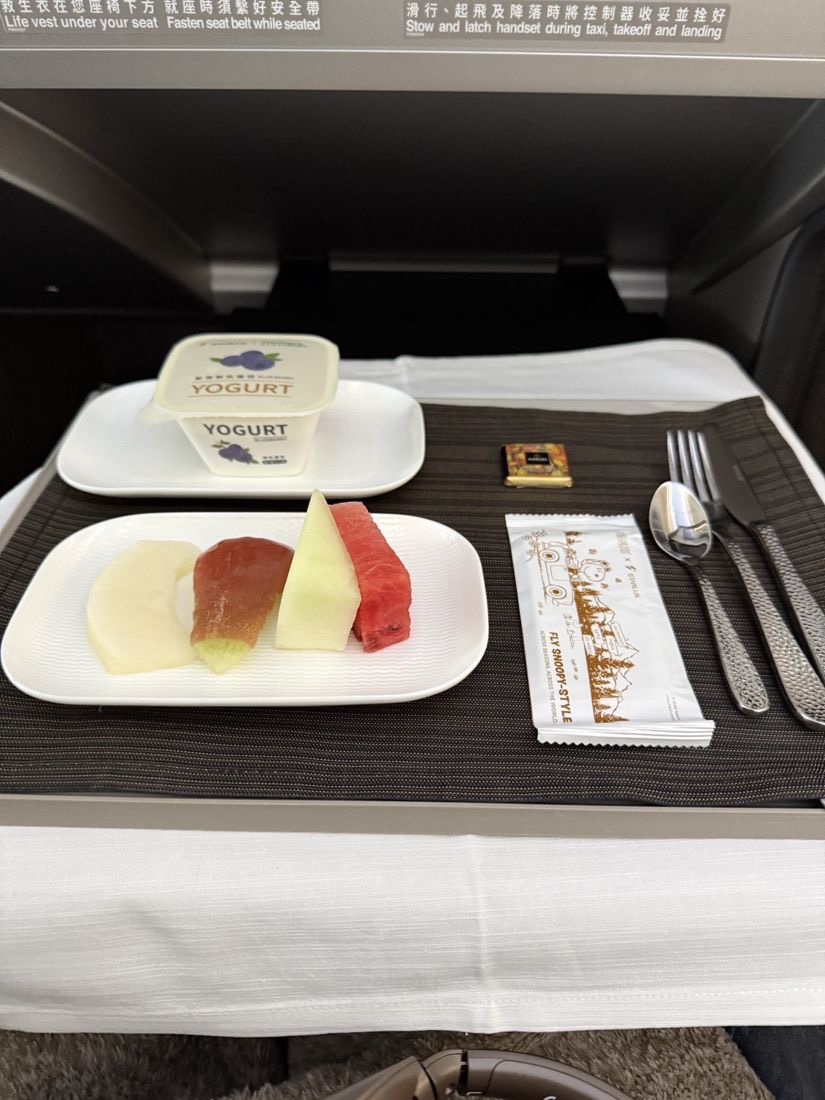
The finale: fresh fruit, blueberry yogurt and a small chocolate. Nobody minded the wait for this course.
Passenger tips: improving your odds (no guarantees)
You can't plan a free upgrade. You can make yourself the easy choice when one comes up.
Be polite and patient. Agents have discretion, and the calm person at the counter is easier to help than the one making demands. Ask for a solution, not a favor: "Is there any way we can sit together?" works better than "Can we have an upgrade?"
Fly busy flights. Operational upgrades happen when economy is full. Peak days, holiday weekends and the last flight of the day are when this is most likely.
Join the frequent-flyer program, even as an occasional traveler. When agents are choosing between two otherwise identical passengers, membership can be the tie-breaker.
Dress neatly. Few airlines admit it matters, but nobody wants to move someone in gym shorts next to a paying business passenger. Smart casual is cheap insurance.
Travel light and check in on time. Show up too late and the seat map is locked; show up too early and the airline doesn't yet know how full the flight is. Somewhere in the middle is usually best.
Bid or pay to upgrade. Many airlines now offer upgrade bidding or discounted upgrades at the gate. For long-haul flights or overnight work trips, this is often the best value in travel.
If you really need to sit together, pay for seats. Our luck was luck. If you're travelling with kids or someone who needs help, book seats early. Don't count on a split seating turning into a reward.
My take
What stayed with me isn't the steak, although it was good. It's how one small decision by a frontline employee changed how I feel about the whole company. For those of us who manage teams or serve customers, that's the lesson: the cheapest fix is often to solve two problems at once, and the people closest to the problem usually see the solution first, if they're allowed to act on it. That agent wasn't giving away revenue. She freed two economy seats, avoided a seat-swapping scene, and gained two loyal customers for the price of a meal. I also think the "be nice and you might get lucky" advice is a little overrated. Kindness doesn't earn you a seat. It just keeps you from being the passenger nobody wants to help. So be the easy yes, accept the economy seat calmly, and if luck shows up, enjoy it and say thank you. We'll still be booking economy next time, but we'll probably check in a little more cheerfully.
Get NeatRead's best posts in one weekly email
One email a week, no password. Unsubscribe anytime.
or continue with email
With email, we send you a sign-in link.
By joining, you agree to the Terms and Privacy Policy.
Comments
No comments yet. Start the conversation.
Sign in to comment. It takes an email address, no password.