Why does everyone need a standing desk
Not because standing is magic — but because no human body was built to hold one shape for nine hours straight.
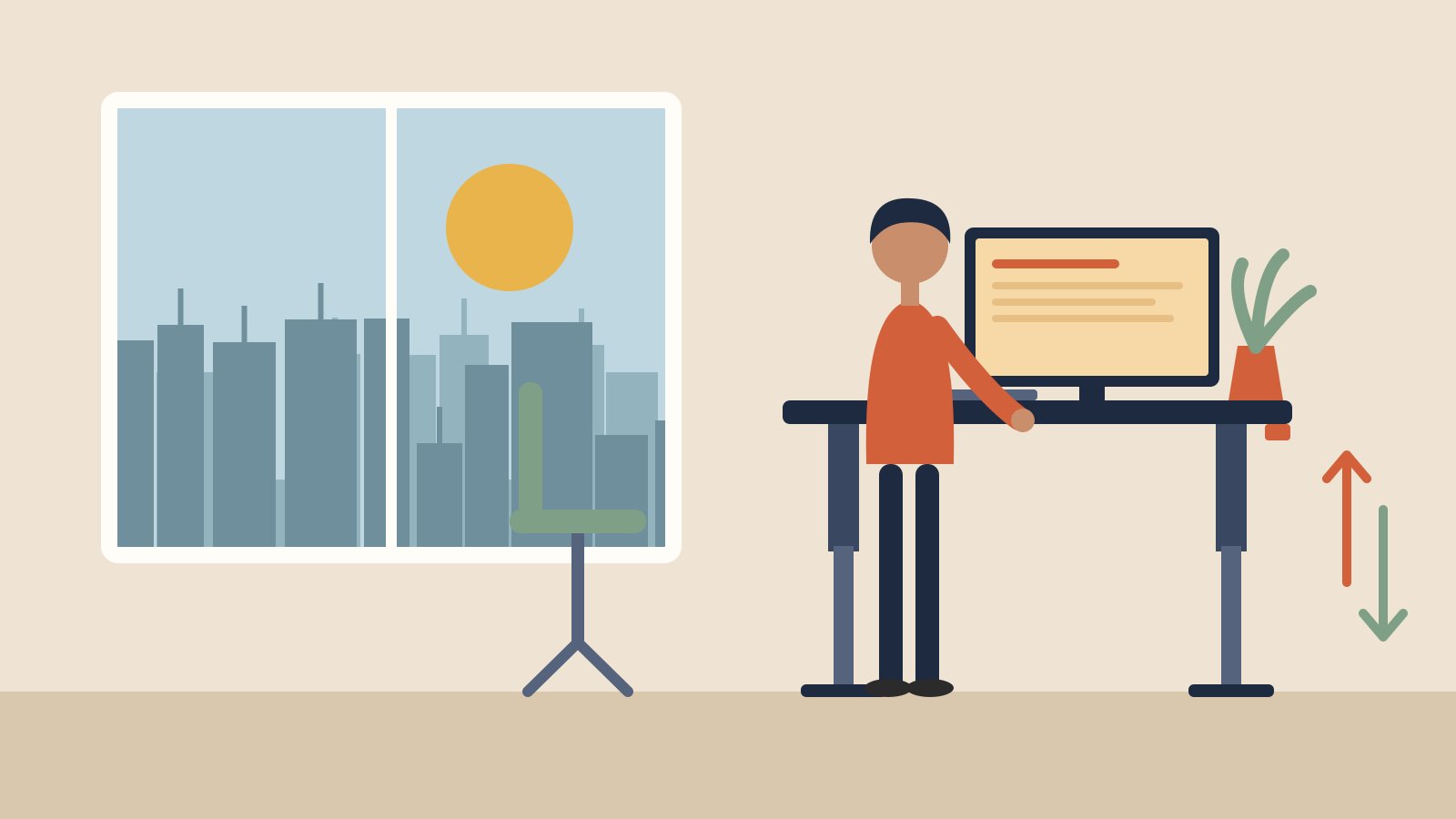
Somewhere right now, in a glass tower in Singapore, a co-working loft in Berlin, or at a kitchen table in Nairobi that doubles as an office, someone has been hunched over a laptop for two hours without moving. Their shoulders have crept up toward their ears. Their lower back has gone quiet in that worrying way. Eventually they'll stand up, probably for coffee, and be a little surprised by how creaky they feel.
That person is most of us. Work happens in hundreds of languages and time zones, but physically it has settled into one shape: a chair, a screen, and a body folded at the hips for most of the day.
The chair won, and nobody noticed
Office workers are some of the most sedentary people alive. In one well-known UK trial, desk workers spent between 70% and 85% of their working hours sitting, and their total sitting time came to almost ten hours a day once commuting and evenings were counted. A larger study of more than 83,000 adults followed with wrist-worn trackers found that people who sat for over ten hours a day were at least 13% more likely to develop serious heart problems in the years after.
The rest of this post is for signed-in readers
Sign in or create a free account to read “Why does everyone need a standing desk”. No payment needed.
You’ll get a welcome email and new posts from NeatRead, or just a weekly recap if you prefer. Unsubscribe anytime.