Case Study No. 5
Why can Garmin compete with Google and Apple?

Listen to this post · 9 min
Read aloud by a synthetic voice.
Free maps on every phone should have finished it off. Instead, Garmin just had the best years in its history. Here is how a GPS company rebuilt itself, and what the rest of us can learn from it.
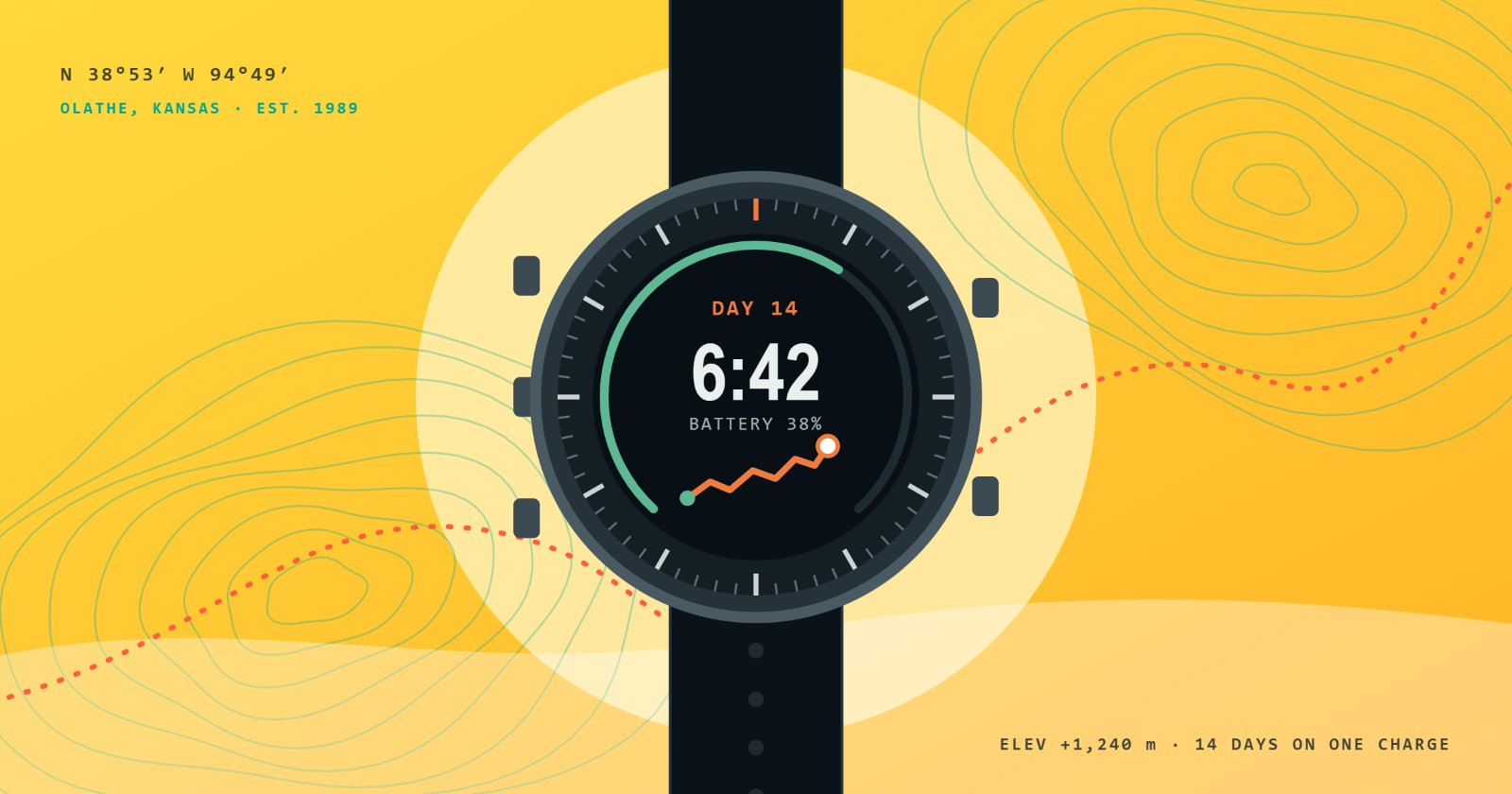
Look at the wrists on any morning commute, in London, Taipei or São Paulo, and you will see the usual mix: Apple Watches, some Samsungs, and a surprising number of chunky, round-faced Garmins. That last group probably shouldn't exist. Fifteen years ago, plenty of analysts would have bet that Garmin was heading the way of the fax machine.
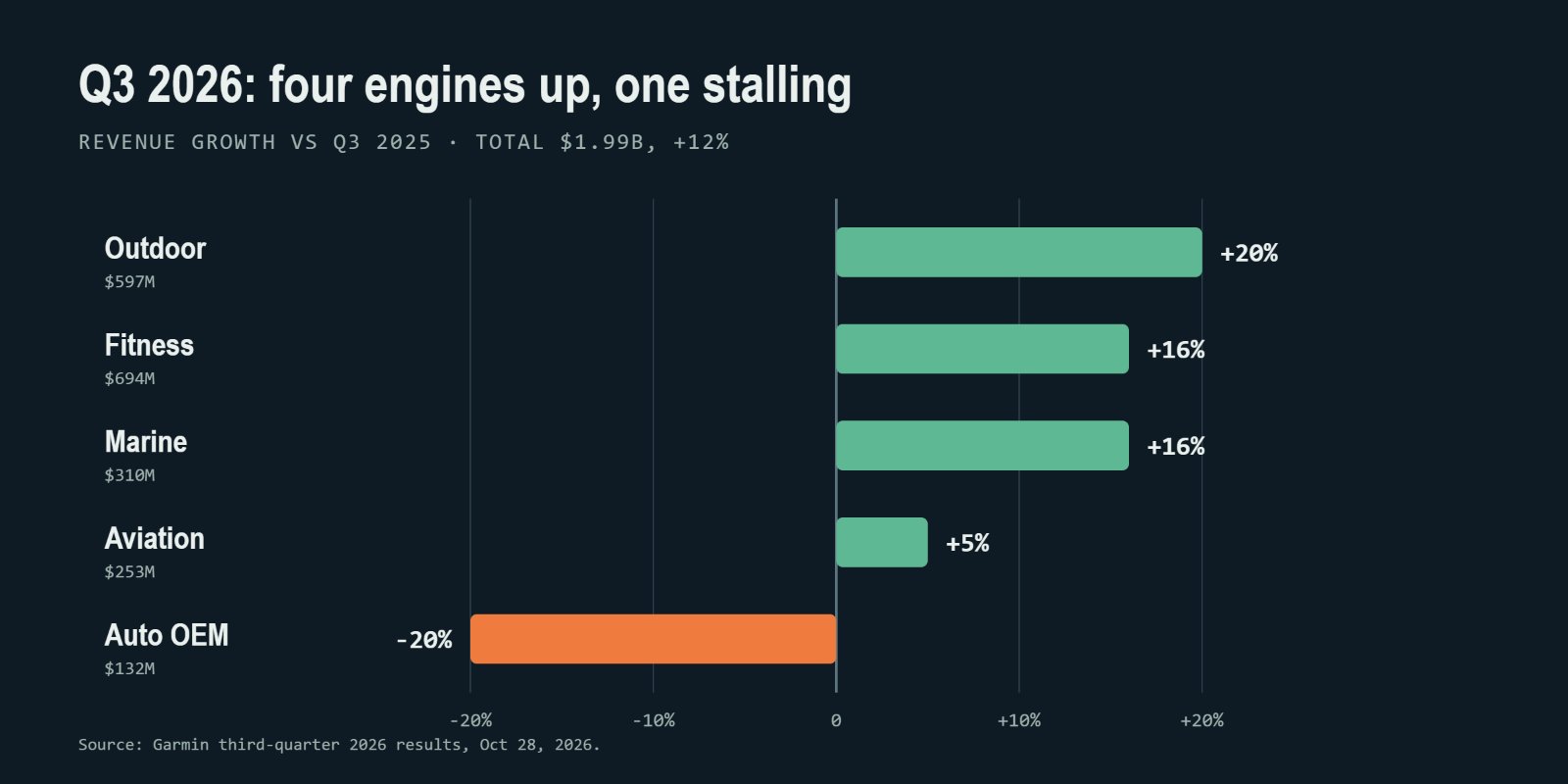
Instead, the company is posting the best numbers of its 37-year life. Revenue in 2025 hit a record $7.25 billion, up 15%, with all five business segments setting records and more than 20 million devices shipped. In the third quarter of 2026, revenue rose another 12% to $1.99 billion, and management raised its full-year forecast to about $8.15 billion.
So how does a company that sold car navigation boxes end up thriving next to the two firms that made those boxes obsolete? The short answer: it stopped playing the game it was losing and chose games it could win.
The day the map became free
Garmin was founded in 1989 in Kansas by Gary Burrell and Min Kao, a Taiwan-born engineer. The name joins their first names. Its first customers were pilots and boaters who needed GPS they could trust with their lives.
Then came the consumer boom. By the mid-2000s, Garmin's dashboard navigators were in millions of cars, and driving products made up most of its sales. Revenue peaked around 2008. Then smartphones took off, and Google started giving away turn-by-turn directions for free. A gadget people had paid a few hundred dollars for became a free app overnight, and Garmin's biggest business began to shrink.
Most companies in that spot do one of two things. They cut prices to defend the old product, or they try to beat the giant on its home turf. Garmin did neither.
Pick the mountain, not the highway
Garmin asked a simpler question: where does a phone, or a do-everything smartwatch, fall short? The answer was anywhere a person's safety, race or living depends on the device. A pilot can't lean on a phone app in a storm. A fisherman wants sonar that shows what is under the boat. A trail runner in a 30-hour ultramarathon can't stop to charge.
Battery life is the clearest example. An Apple Watch is a brilliant iPhone companion, and it usually needs a charge every day or two. A Garmin sports watch can run for one to three weeks in smartwatch mode. Apple builds for apps, notifications and its ecosystem. Garmin builds for battery, GPS accuracy, toughness and the training data serious athletes obsess over. Plenty of runners own both: one for the office, one for race day.
Garmin doesn't need to win the average shopper. It needs to be the obvious choice for the people who care the most.
Those people tend to pay more, upgrade loyally and tell their friends. That is a very different business from fighting for the mass market.
Five engines instead of one
The second move was spreading the bets. Garmin now reports five segments: fitness, outdoor, aviation, marine, and auto OEM, which builds systems for carmakers.
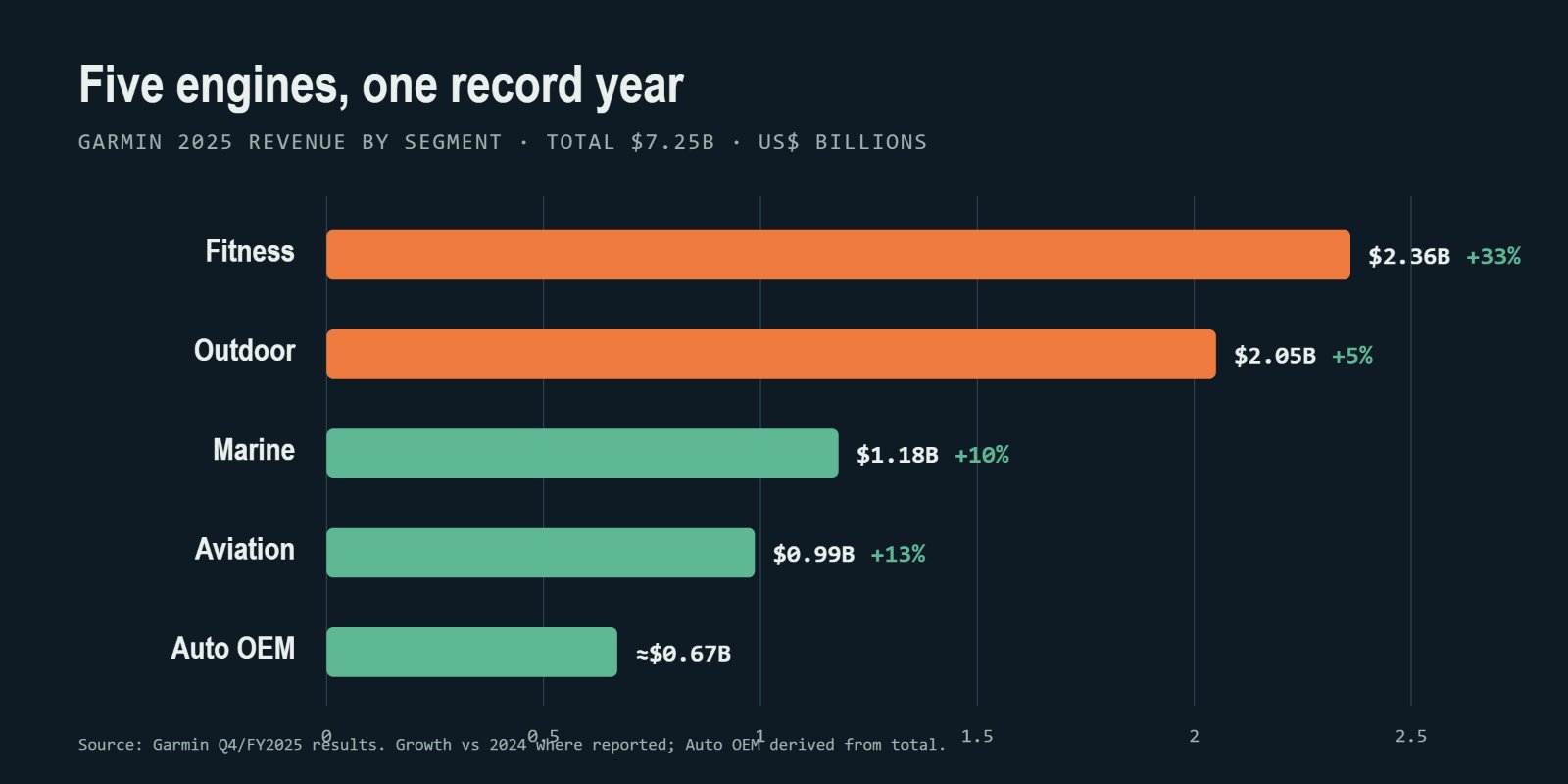
The mix matters because the engines rarely stall together. In 2025, outdoor grew only 5%, but fitness jumped 33% to $2.36 billion. In the latest quarter the pattern flipped: a new generation of adventure watches pushed outdoor up 20%, while marine grew 16% on new sonar products.
Aviation is the quiet star. It is one of the smaller units, yet last quarter its gross margin was 78%. Building certified cockpit systems is slow, heavily regulated work, which is exactly why few rivals bother. That is the kind of moat a giant platform company rarely wants to dig.
Owning the factory floor
Here is the part of the story most people miss. Garmin designs much of its own hardware and makes most of its products in its own factories, many of them in Taiwan, rather than handing everything to contract manufacturers. That is unusual for a consumer electronics brand. It gives Garmin tight control over quality, speed and cost, and it lets the company build small batches for niche products, like dive computers or a horse wellness tracker, that an outside factory might not prioritise.
You can see the payoff in the margins. In the third quarter of 2026, gross margin rose to 63.3%, up 4.2 points from a year earlier, and operating income jumped 34% to $612 million. For a hardware maker, those look almost like software numbers.
From devices to daily habits
The newest layer of the transformation is less visible. Garmin Connect, the free app that stores your runs, sleep and heart-rate history, has become the glue that keeps people in the family. Once years of training data live in one place, switching brands feels like throwing away a diary.
On top of that, Garmin added a paid tier, Connect+, with extras such as AI-powered insights and nutrition tracking. Chief executive Cliff Pemble says the subscription is growing faster than the hardware businesses behind it. It is still small, but it nudges Garmin from "sell a watch every few years" toward "earn a little every month."
Not a fairy tale
Garmin is not beating Apple or Google at their own games, and it isn't trying to. Apple still sells far more smartwatches. The weak spots are real, too. Auto OEM revenue fell 20% last quarter and the unit is losing money while it waits for new carmaker programmes to ramp up. Management has warned that pricier memory chips will start to bite into costs. And premium watches are a want, not a need, so a weak economy would hurt.
Still, the company has a cushion: about $4.1 billion in cash and investments at the end of September.
What working people can take from it
You don't need to run a hardware company to borrow Garmin's playbook. A few lessons travel well to almost any job or business:
- When the ground shifts, move early. Garmin's car business was shrinking. It invested in new markets before the old one collapsed.
- Serve the people who care most. Being essential to a smaller group can beat being optional for everyone.
- Compete where giants get bored. Certification, battery life, niche sports. Platforms chase scale; specialists win on depth.
- Keep more than one engine running. Five businesses meant no single bad year could sink the company.
- Own the part that matters. For Garmin, that is the factory and the data. For you, it might be a skill or a client relationship nobody else has.
Next time you spot a round Garmin face on a colleague's wrist, remember the story behind it. That watch exists because a company was willing to let go of its biggest product and start climbing again on higher ground.
Sources: Garmin fourth-quarter and fiscal 2025 results (Feb 2026); Garmin third-quarter 2026 results and 10-Q (Oct 28, 2026); Q3 2026 earnings call coverage via MarketBeat and Wareable. Figures in US dollars.
Get NeatRead's best posts in one weekly email
One email a week, no password. Unsubscribe anytime.
or continue with email
With email, we send you a sign-in link.
By joining, you agree to the Terms and Privacy Policy.
Comments
No comments yet. Start the conversation.
Sign in to comment. It takes an email address, no password.