What AI cannot replace
Listen to this post · 8 min
Read aloud by a synthetic voice.
A field note for people who still have to show up on Monday.
Every few months another demo makes the rounds. A model writes the contract, drafts the lesson plan, reads the scan, fixes the bug. Somebody posts it in the group chat with a shocked face, and a few minutes later most of the people who saw it quietly open their own work and wonder what is left.
I'd like to answer that question without cheerleading and without panic. Some of what you do will be done by software, and some of it already is. But when I look at what people in Lagos, Lisbon, Manila and Chicago actually get paid for, a handful of things keep refusing to move. It isn't because the machines are dim. It's because those things were never mainly about producing text or answers in the first place.
First, what you should let go
It would be dishonest to pretend otherwise. Software is already better than most of us at first drafts, at translating between dozens of languages, at searching a thousand pages for the one clause that matters, and at doing the same dull task at three in the morning without complaint. A bookkeeper in Nairobi who uses it to close the month in two days instead of five hasn't been replaced. She has been given her afternoons back. The people in real trouble are mostly those whose whole role was moving information from one box to another, and who were never invited to do the part above it.
So here are six things that sit above it.
1. Someone has to answer for it
A model can draft a diagnosis, a structural calculation or a layoff memo. What it cannot do is put its name on the page and stand there when it goes wrong.
Think of a site engineer approving a concrete pour at six in the morning. The numbers already come from software. The job is the moment she says yes, knowing that if she is wrong, her license, her reputation and somebody's safety are on the line. Responsibility is not a feature you bolt onto an output. It is a relationship between a person and the consequences.
The same pattern shows up in a hospital in São Paulo or a bank in Singapore: the system suggests, the human decides, and the human is the one sitting in the review meeting afterwards. Courts, regulators, insurers and customers all want a person at the end of the chain. That isn't a quirk of today's rules. It is how societies decide who gets trusted. If your work ends in a signature, an approval, a yes or a no, that part becomes more valuable as drafting gets cheaper, because more output means more things that need an owner.
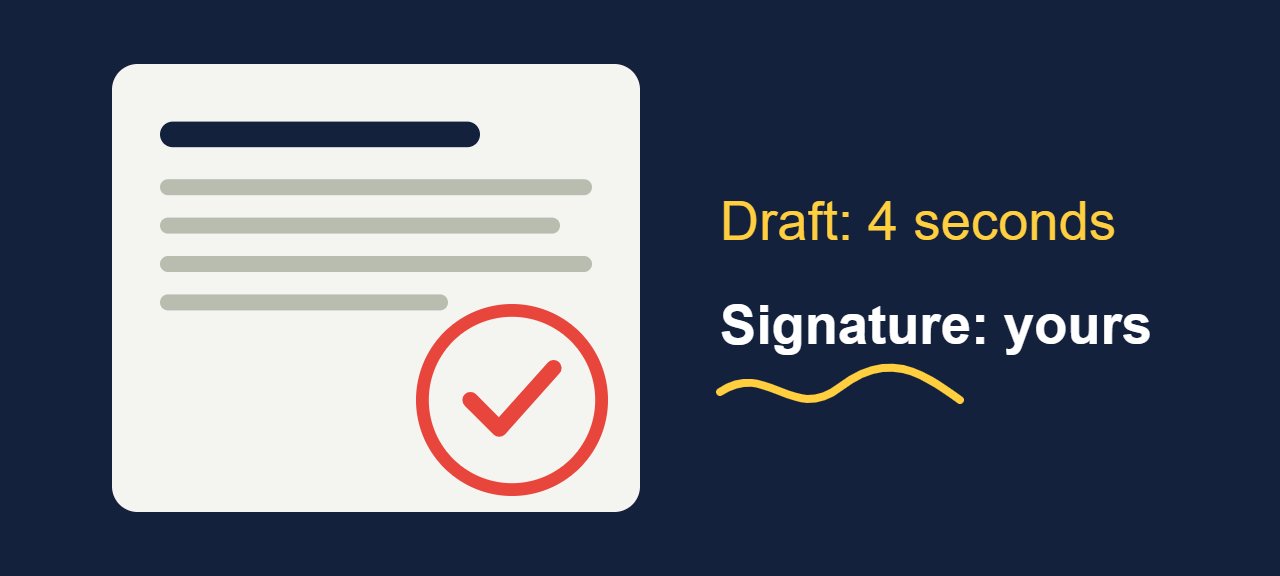
The draft is cheap now. The signature is not.
2. Knowing what the room is really saying
Picture a sales call that is going well on paper. The buyer says all the right words. Then he pauses a beat too long before asking about price, and you hear it: the budget is not his to decide. So you change the conversation, and you ask who else should be on the next call.
A great deal of working life runs on signals that never reach a transcript. Who goes quiet in the meeting. Whose boss just changed. Which "fine" means fine and which "fine" means trouble. A model can read the notes, but it wasn't there, and it doesn't carry the last three quarters, the favor you did someone two years ago, or the reason that team distrusts finance.
This matters more, not less, in a world of remote teams spread across time zones. Your colleague in Warsaw can't see your face behind a muted camera. The people who bridge that gap with a short call, a kind message or a remembered birthday are doing real infrastructure work that never shows up on a dashboard.
Trust in particular gets built slowly, through small acts of reliability. Nobody trusts a supplier because the email was well written. They trust the person who picked up the phone at eleven at night when the shipment got stuck at the port.
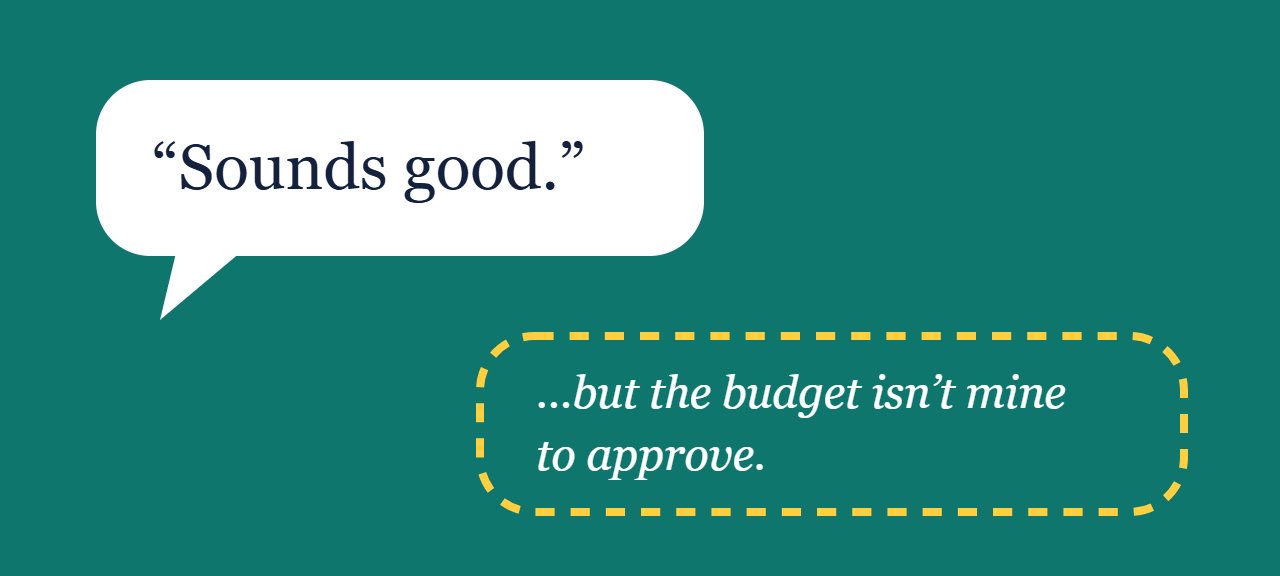
What was said, and what was meant. Only one of them reaches the transcript.
3. Deciding what is worth doing
Ask a model for ten product ideas and you will get ten reasonable ones. Ask it what to build for your company, this year, with these people and this much cash, and it can only guess, because it doesn't live inside your constraints.
Taste and judgment are the ability to say "not that one" for reasons you can't fully list. It is the editor who cuts the best paragraph because it belongs in a different piece. The chef who pulls the bestselling dish because it no longer tastes right. The manager who knows a team can survive one more reorganization but not two.
Models are very good at producing options. The scarce thing is a person with something at stake who chooses, and who is willing to be wrong in front of others. As the supply of competent drafts heads toward infinity, the value moves to two questions: which one, and why now?
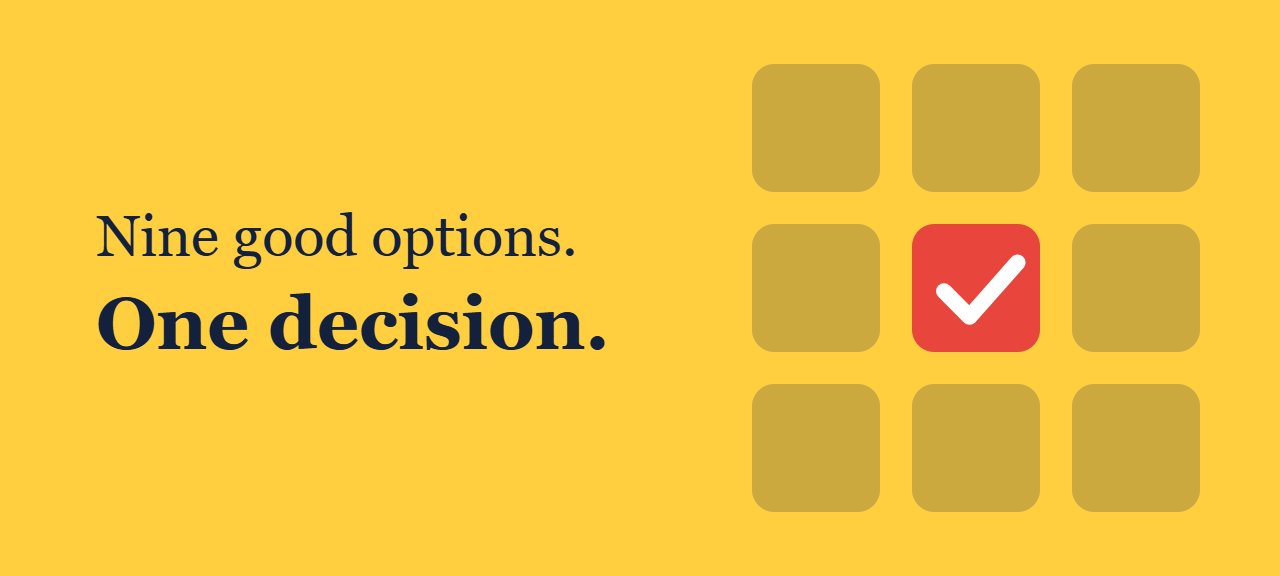
Options are abundant. Choosing is the job.
4. Being physically there
A nurse changing a dressing is also noticing how the patient breathes, whether they flinch, and whether the family in the corner needs a chair. An electrician in an old building in Cairo or Kraków finds the wire that no diagram mentioned. A teacher feels the attention in a room of thirty drop, and changes the lesson halfway through a sentence.
Robots will improve, and some physical work will be automated. Even so, a huge amount of it happens in messy, particular places, and in moments where a person being in the room is the service itself. Being held, being seen, being visited. Those aren't tasks wrapped around a human. They are the thing being delivered.
5. Wanting something
This one sounds abstract, and it is the most practical of the six. A model has no unmet needs. It doesn't want the product to exist, the patient to recover or the kid to get into school. It will work on whatever you point it at with the same energy at three in the morning as at noon, and it won't mind if the project is pointless.
People supply the why. Someone has to notice that customers are angry, that a town needs a clinic, that a process is cruel to the people inside it, and care enough to start. Ask a founder why they began and you rarely hear a market analysis. You hear about an afternoon that annoyed them. Direction, purpose and the stubbornness to finish all come from having something to lose.
6. Handing the craft to the next person
The last one is easy to miss. Every craft is passed on by people watching people: the senior accountant who lets a junior sit in while she handles an angry client, the foreman who says "no, feel this" and puts a trainee's hand on the surface. A model can explain a technique. It can't be the person you want to become.
And if we use it to skip the apprenticeship years entirely, we will wake up in ten years with fewer people who know how to check it.
Responsibility, trust, judgment, presence, purpose. These are not leftovers. They were always the job.
What this does not mean
None of this is a guarantee. Tasks will disappear, and whole job descriptions will shift. Entry-level work that once taught people a craft is already thinner in some fields, which is a real problem for anyone just starting out. And "AI can't do that" is a sentence that has aged badly many times, so I would not build a career on any single task staying safe. The six things above are not tasks. They are the reasons tasks exist.
What to do on Monday
- Move toward the decision. If your week is mostly producing drafts, spend more of it choosing, approving and explaining why.
- Be the person people call. Reliability, shown in person, compounds quietly for years.
- Learn the tools well enough to supervise them. Someone who can check a model's work is worth more than someone who fears it or trusts it blindly.
- Keep one foot in the human part. A customer, a team, a place, a patient.
- Write down why you do this work. You will need that sentence more than you expect.
None of these is heroic. They are habits, and the nice thing about habits is that they pay off whether or not the loudest predictions about AI turn out to be right.
The short version
The list of things AI can't do will keep changing, so the better question may be what we refuse to hand over. We don't hand over the signature, the room, the choice, the body in the doorway, the reason, or the apprenticeship. They are not what is left after the machines take the interesting parts. They are the work. Everything around them was typing.
If that sounds comforting, good. But it should also read like a to-do list. The people who do well will be the ones who practice these things on purpose, instead of hiding behind them.
Now go and do the part only you can do.
Comments
No comments yet. Start the conversation.
Sign in to comment. It takes an email address, no password.