The AI Company That Refuses to Make Fake Photos
Listen to this post · 7 min
Read aloud by a synthetic voice.
Anthropic cares a lot about pictures and video. It just won't paint them out of thin air, and that choice says a lot about where workplace AI is heading.
Picture an ordinary Monday in four cities. A product marketer in Lagos needs a launch graphic by noon. An operations lead in Manila has to make last month's numbers make sense to a room of tired managers. A teacher in Hamburg wants a two-minute explainer for her class. A founder in Taipei needs a mockup of an app screen before an investor call.
None of them is asking for a poem. They want something to look at. That is why so many people noticed that Anthropic, the company behind the Claude assistant, spent much of 2026 shipping tools that make visual things. And it is why the same question keeps coming up: is Anthropic jumping into image and video generation like everyone else?
The honest answer is yes and no. The company is clearly focused on pictures and video. It is just as clearly avoiding the thing most people mean when they say "AI image generation."
What Anthropic actually shipped
Start with the calendar, because it is busier than most people realize. On April 17, Anthropic Labs launched Claude Design, a space for making designs, prototypes, slides and one-pagers together with Claude. Eleven days later the company released nine connectors that plug Claude into creative software people already pay for: Adobe Creative Cloud, Blender, Ableton, Autodesk Fusion, SketchUp, Splice, Affinity by Canva and Resolume. It also became a patron of the Blender Development Fund, which keeps the open-source 3D tool going.
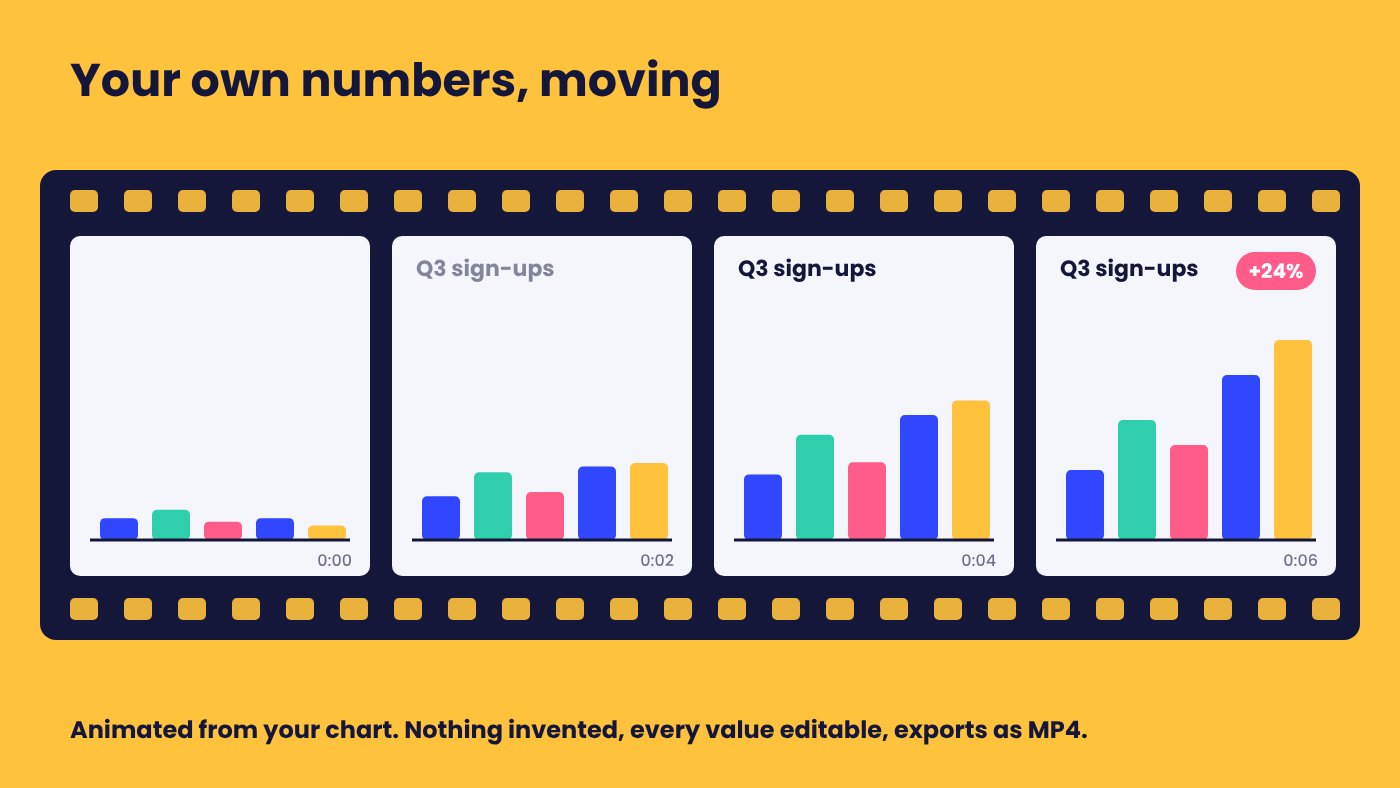
In September, Docs and Slides arrived inside Claude, and Design moved into ordinary conversations. Then on October 8 came Dashboards, which turns company data into live charts, and Motion, which turns text, charts and images into short animated explainers you can export as an MP4. The same announcement took Docs, Slides and Design out of beta on every plan, and said people had already made more than 45 million docs, decks and designs.
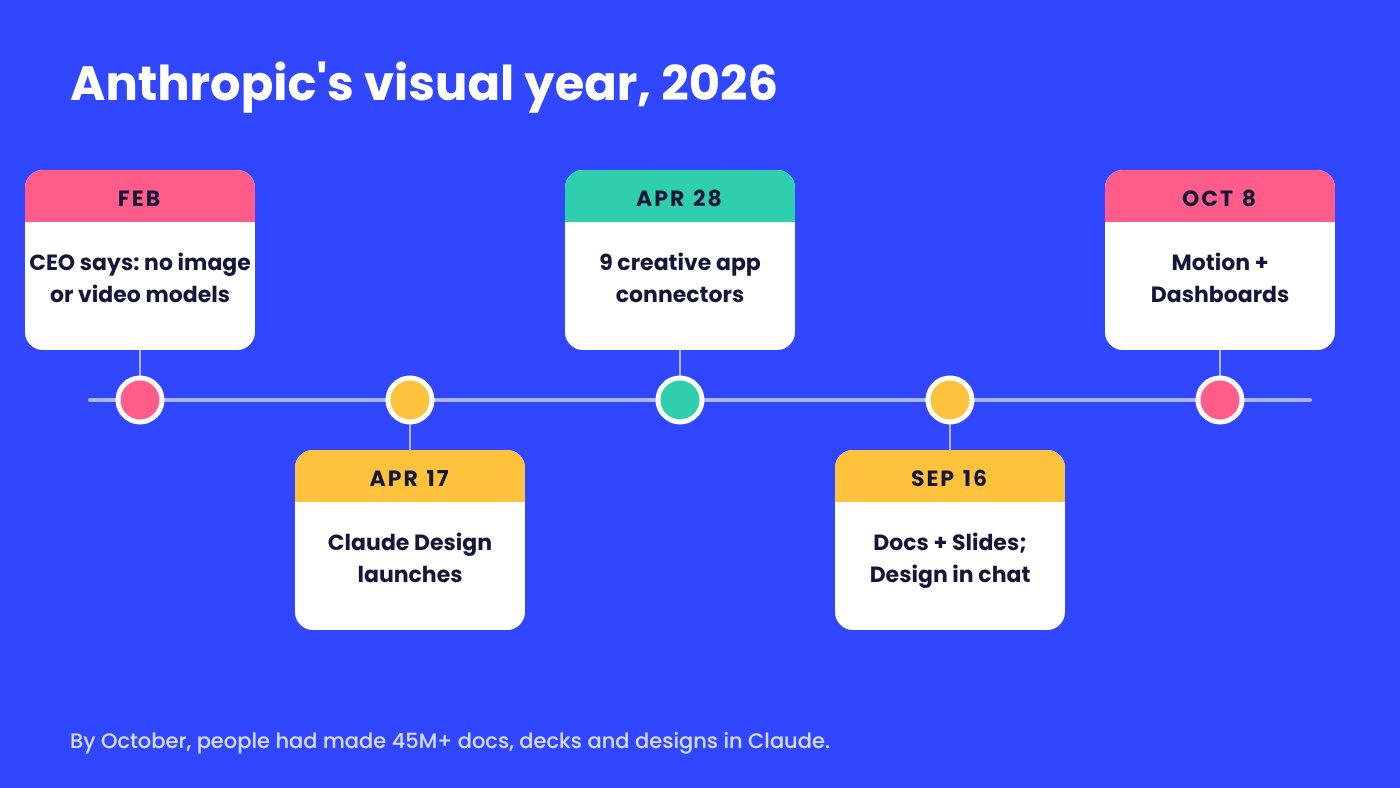
That is a lot of visual work for a company best known for writing and code.
The part they left out on purpose
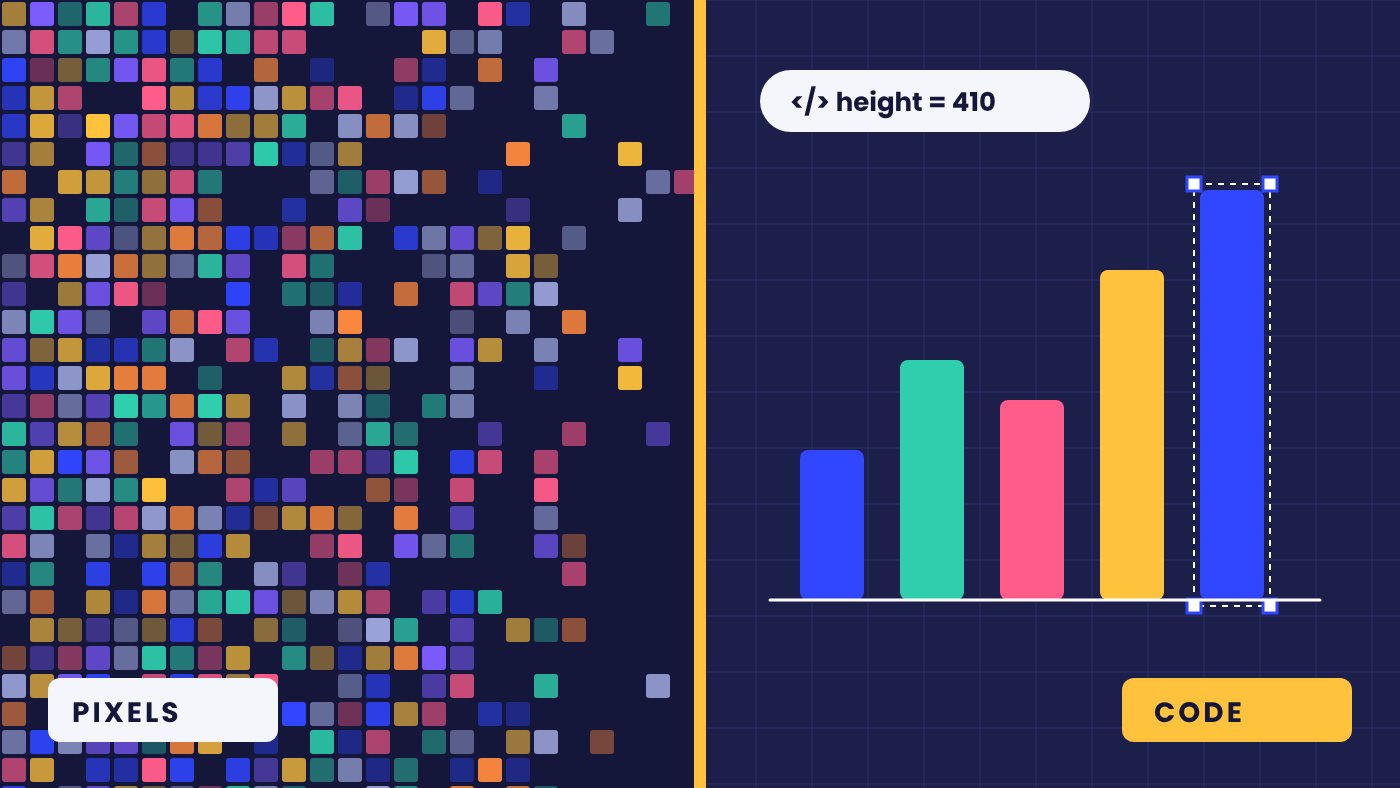
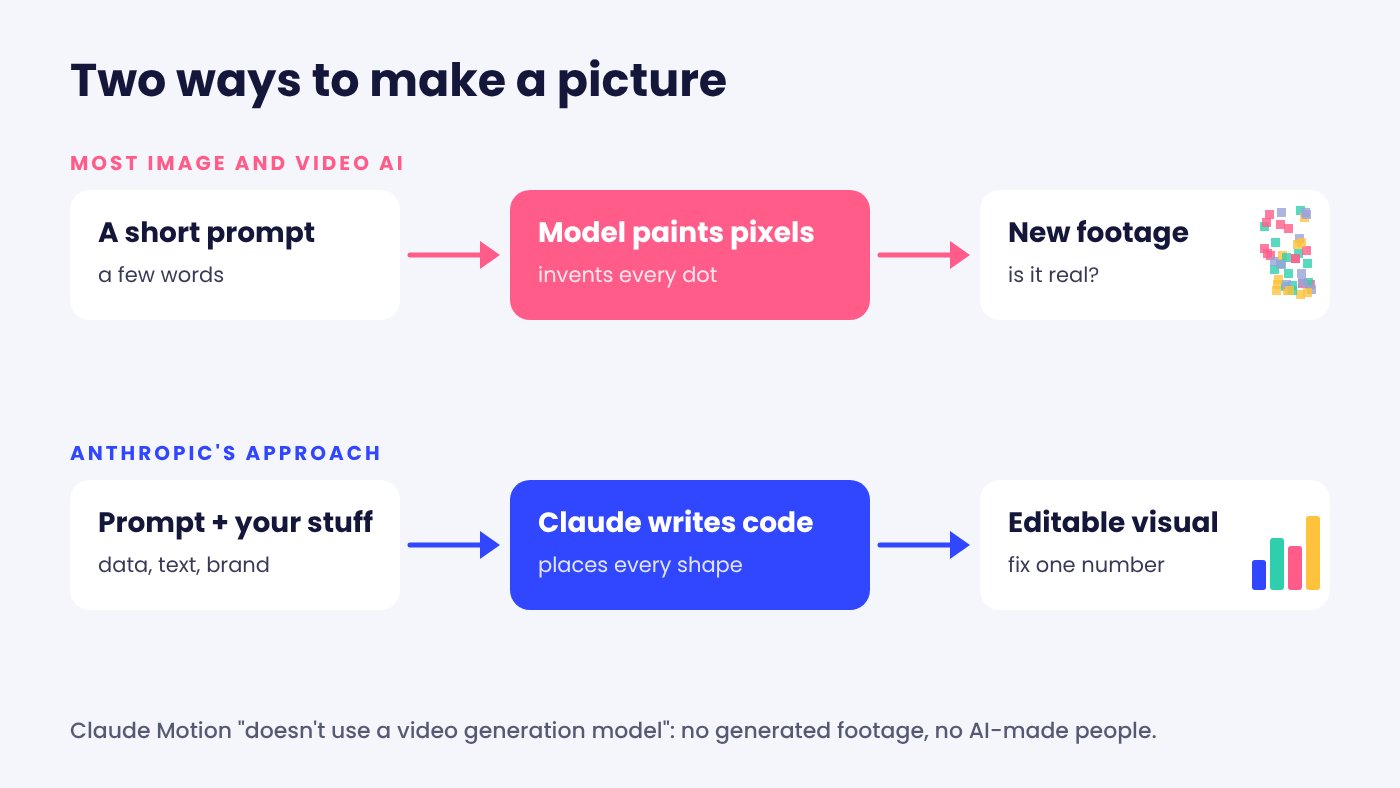
Read the fine print and one detail stands out. Anthropic says plainly that Motion does not use a video generation model. There is no generated footage and there are no AI-generated people. Claude writes the animation as code, deciding where every word sits, what color it is and how long it stays on screen. Its help pages say the same about still images: Claude does not produce photos or illustrations the way image generators do.
This is a choice, not a gap. In a February interview on Nikhil Kamath's People by WTF podcast, chief executive Dario Amodei said Anthropic does not build models that generate images and video, and pointed to how hard it has become to tell what is real from what is fake.
Why visuals matter so much at work
Here is what a lot of coverage misses. The pictures working people need every day are rarely photographs. They are the bar chart for the quarterly review, the process diagram for new hires, the title slide, the product mockup, the one-minute clip that explains a price change to customers in three countries.
These images carry information. The bar has to be the right height. The logo has to be the right blue. The date on the slide has to be correct. A picture built from code is good at exactly that, because every shape is placed on purpose and stays editable. If the number for week six changes, you change one value and the rest of the animation stays put. With a model that paints pixels, fixing one detail usually means generating the whole thing again and hoping.
So when Anthropic invests in pictures and video, it is investing in the visual layer of office work: the stuff that sits between a spreadsheet and a decision.
Why not paint the pixels too?
Two reasons come up again and again: trust and business.
Trust first. From election seasons to bank-transfer scams, realistic fake faces and voices are now a problem on every continent. A company that sells itself on careful, reliable AI has good reason not to build a machine that produces convincing people on demand. A chart made from your own sales data has a clear origin. A lifelike video of a person who never existed does not.
Then business. Most of Anthropic's revenue comes from companies and developers. Their legal teams worry about who owns an image, whether it resembles a real person, and whether it could embarrass the brand. Visuals assembled from a customer's own numbers, words and approved assets answer most of those questions before anyone asks them.
Partner, don't compete
There is a third, quieter reason. Strong image and video models already exist, and many of them live inside tools creative teams use all day. Rather than build a rival, Anthropic is wiring Claude into those tools. The Adobe connector reaches more than 50 Creative Cloud apps, including Photoshop and Premiere. The Blender connector, built by Blender's own developers, lets Claude drive the software through its Python interface.
And if you really do need a generated photo or clip, connectors let Claude call a dedicated image or video model from another provider. In that setup Claude acts less like a painter and more like a producer: it writes the brief, keeps the brand rules, handles the dull steps and hands the pixel work to a specialist.
Go back to those four Mondays. The marketer in Lagos can lay out the launch graphic with Claude and send the hero photo to a generator her agency already licenses. The operations lead in Manila gets a dashboard that refreshes itself. The teacher in Hamburg, if her school's plan includes Motion, turns her notes into a short animated explainer. And the founder in Taipei walks into the investor call with a clickable mockup instead of a napkin sketch.
What this means
Whether you work in an office, a studio or a classroom, a few practical rules follow.
- Use Claude for visuals that carry information: charts, explainers, decks, one-pagers and screen mockups. Give it your real numbers and your brand colors.
- Use a dedicated generator for photos and footage, or one connected to Claude. Label that content clearly when you share it.
- Keep things editable. A picture built from parts is far easier to fix when your manager spots a typo five minutes before the meeting.
- Check what your plan includes. Motion is in beta for Team and Enterprise, Dashboards is in beta on paid plans, and Docs, Slides and Design are on every plan.
The bigger lesson goes beyond one company. For years the race in AI images was about realism: whose picture looked most like a photo. Anthropic is betting on a different race. At work, the most valuable picture is rarely the most realistic one. It is the one you can trust, explain and fix.
Comments
No comments yet. Start the conversation.
Sign in to comment. It takes an email address, no password.