Small Plants, Long Walks: How Pikmin Went Viral
Listen to this post · 6 min
Read aloud by a synthetic voice.
A quiet walking game from 2021 became one of 2026's most talked-about apps. Here is what Nintendo and its partners did right, and what any team can borrow.
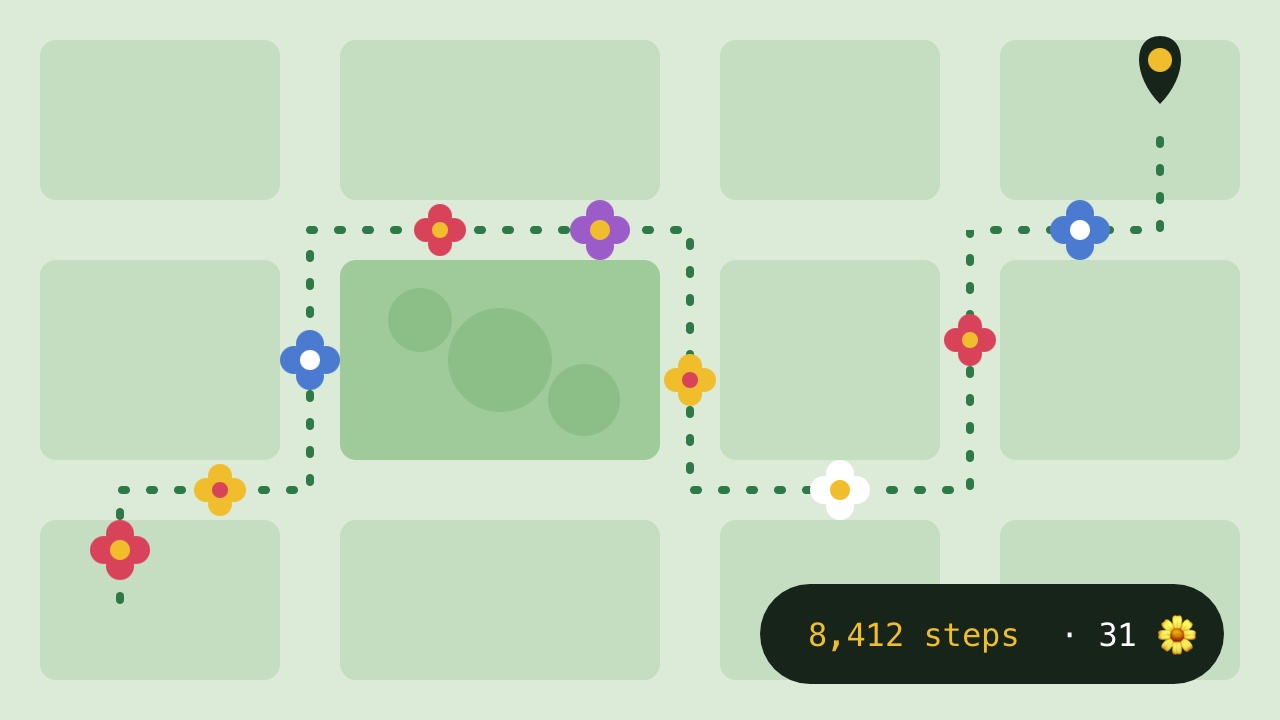
Illustration: one lunch-break walk, logged as a trail of flowers. That daily map is the thing players share.
Ask around an office in Taipei this year and someone will show you their flower map. It isn't a real garden. It is a phone screen covered in petals, one trail for every walk to lunch, the MRT or the night market. That is Pikmin Bloom, a walking game Nintendo and Niantic launched in late 2021 to mark the series' 20th birthday. For years it was a quiet side project. Then, in 2026, it took off.
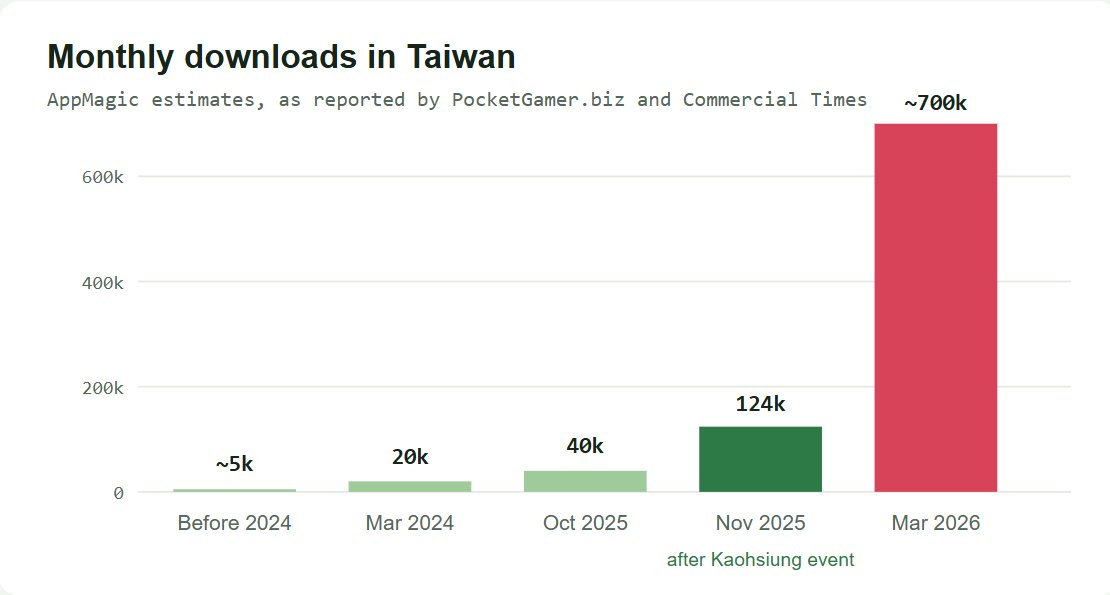
The numbers explain why marketers suddenly care. AppMagic estimates reported by PocketGamer.biz put the game's app-store revenue at $35.7 million in the first half of 2026, already 94% of its record 2025 total. Taiwan drove it. Spending there rose about 902% year over year, and Taiwan alone supplied 52% of global revenue. Monthly downloads in Taiwan, around 5,000 before 2024, reached almost 700,000 in March 2026.
So what happened? There was no single giant ad campaign. Pikmin went viral because a lot of small, patient decisions finally lined up.
1.Nintendo played the long game
Pikmin turns 25 this year. For most of that time it was a cult favorite, admired but never a blockbuster. Nintendo kept investing anyway. Before Pikmin 4 launched in July 2023, it ran quizzes on JR East trains, opened a Pikmin portal site, brought the first two games to Switch, and made merchandise around the idea of Pikmin turning up in everyday life. The payoff: 401,853 physical copies in Japan in launch week, more than the first three games' debuts combined, and 2.61 million worldwide in about two months, the best in the series.
The console game also sold the free app. An analysis by Taiwan's Meet startup site found Pikmin Bloom's monthly downloads jumped from about 107,000 to 247,000 the month Pikmin 4 arrived, and stayed above 200,000 afterwards. Nintendo keeps feeding the loop: Pikmin appeared in The Super Mario Galaxy Movie this year, and a Switch 2 edition of Pikmin 4 lands on November 12.
2.It fits into a day people already have
Most games ask for your evening. Pikmin Bloom asks for your commute. You walk, steps grow seedlings, and your little helpers plant flowers along your route. At night you get a diary of where you went.
For working people, that is the hook. Players describe it as a reason to walk more than a game. Taiwanese media reported retirees taking it up and walking 10,000 steps a day, with doctors noting it can ease loneliness. A product that attaches itself to something people already want, like health and fresh air, doesn't have to fight for attention.
The marketing budget bought a reason to show up. The players made the advertising.
3.Social, with the pressure turned off
Pokémon GO has gyms and battles. Pikmin Bloom has almost nothing to compete over. Players team up to clear mushrooms, take on weekly challenges, and swap postcards. You can't even chat. The only way to say hello is a picture of a place.
That sounds limiting, but it is the point. There is no toxicity to police and no ranking to lose. Posting your flower map on Threads or Instagram feels like sharing a nice walk, not bragging about a score, and pleasant content spreads. Taiwan's main Facebook group for players passed 245,000 members.
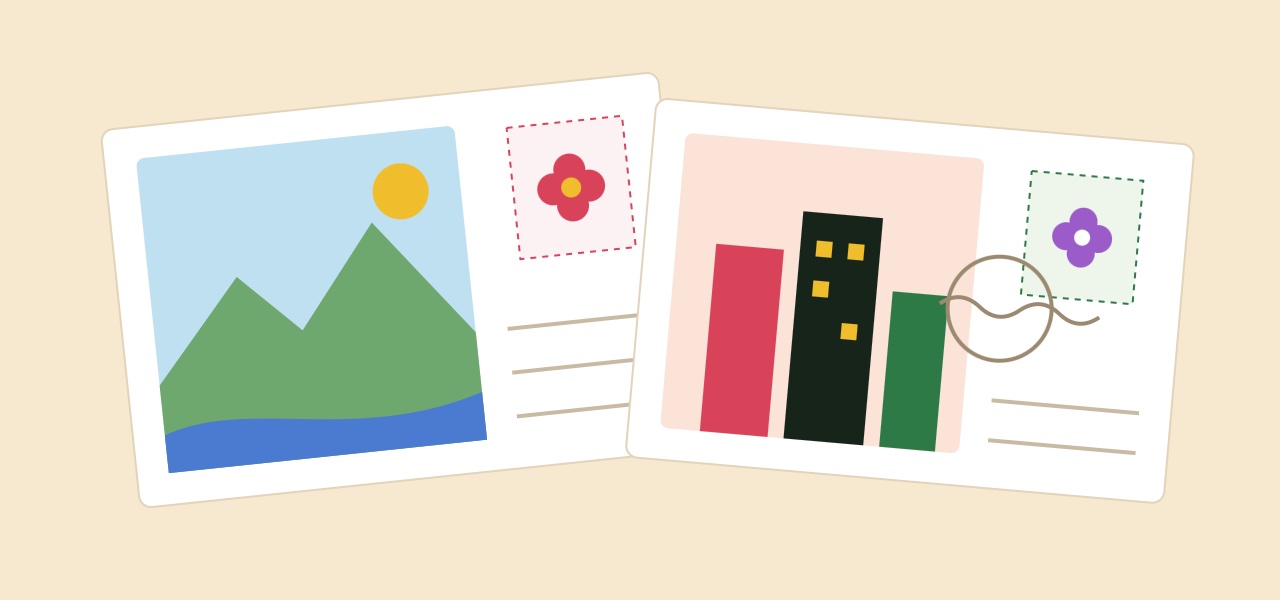
Illustration: postcards are the only way players greet each other. No chat means no arguments.
4.The real world became the ad space
Taiwan's turning point happened offline. After an in-person event in Kaohsiung in October 2025, installs hit a record 124,000 the next month and kept snowballing. In spring 2026, the Chiayi Arts Festival ran a month-long Pikmin walk with limited seedlings and postcards. People travelled across the island for it, and nearby convenience stores started selling drink-and-charger bundles for players.
In May, Seoul hosted a paid Pikmin Bloom Journey event. Everywhere, monthly Community Days give players the same reason to walk on the same weekend. Every event produces photos, maps and stories that people post themselves.
5.Fans and fame did the talking
Nobody needed to pay K-pop idols to play. NewJeans' Hanni wore a Pikmin flower on a livestream, and NMIXX's Bae said it was the app she used most. Sincere, unpaid enthusiasm is worth more than a sponsored post, because fans can tell the difference.
6.Partners got room to work
Nintendo owns the characters, but outside partners build and run the app. Reports credit the publisher with putting more marketing into community activity in high-potential markets like Taiwan and Japan. Nintendo's job was to protect the character's charm and keep the console and mobile sides pointing at each other.
The flip side
Viral growth tests a product as much as it rewards it. Players in Taipei complain about "mushroom shortages" because too many people chase the same battles, and scammers have posted fake free-gift codes to steal accounts. If you plan for growth, plan for its side effects too.
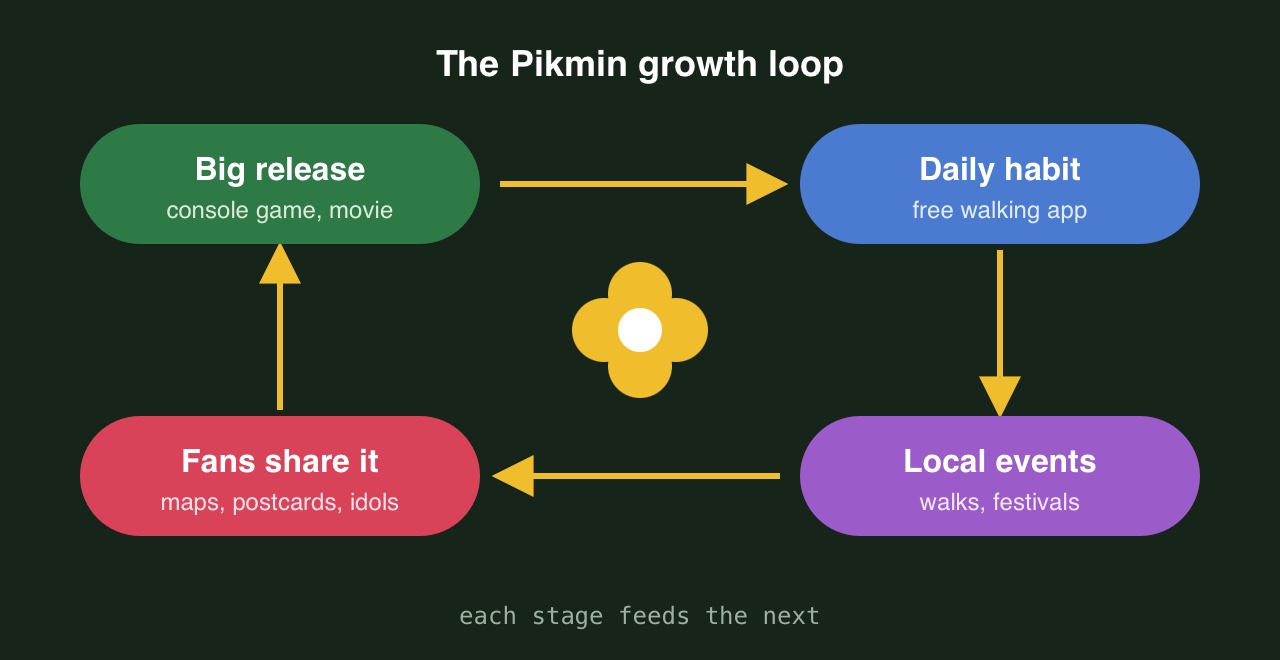
Each step promotes the next. None of them is an expensive ad buy.
What the rest of us can learn
- Be patient with good assets. Pikmin waited 20 years for its breakout. Keep investing in what people love, even when it isn't your biggest earner.
- Attach to a habit, not a time slot. Ask what people already do every day and how your product can make it nicer.
- Make sharing feel generous, not boastful. People post things that make them look kind, curious or healthy.
- Give people a place and a date. Events turn customers into a crowd, and crowds make content.
- Let fans be the voice. Earned praise beats bought praise. Make it easy, then stay out of the way.
- Connect your products. Each launch should send people to the next thing you make.
Pikmin didn't go viral by shouting. It went viral by showing up on millions of ordinary walks and making each one a little nicer to talk about. Most companies can't invent cute plant creatures. Any of them can ask a simple question: what small, daily moment could we make better, and would people be glad to show it off?
Comments
No comments yet. Start the conversation.
Sign in to comment. It takes an email address, no password.