Global Tech Weekly No. 5 Week of Nov 2
Global Tech Weekly: Google's $51 Billion Quarter, Samsung's Memory Windfall, and Apple's Big Friday

Listen to this post · 6 min
Read aloud by a synthetic voice.
Some weeks the news is a firehose. This one had a theme: the AI boom is now so big that it's bending everything around it, from Google's cash flow to the price of memory chips to the rules a telecom regulator in Delhi wants to write. Here's what mattered, and what it might mean for your week.
Google spent $51 billion in three months, and investors flinched
Alphabet's third-quarter results landed on October 28, and on paper they were fine: revenue of $127.6 billion, up 25%, and Google Cloud revenue of $30.7 billion, more than double a year ago, according to Fortune. The part that spooked people was the bill. Capital spending hit $51.4 billion in the quarter, versus $24 billion a year earlier, and free cash flow was negative $9.1 billion.
Search growth also cooled to 12%, from 17% in the previous quarter, and Alphabet told investors to expect a significant increase in 2027 capex. The shares fell more than 11% after hours; CNBC's later headline put the drop at nearly 13%, calling it Alphabet's worst day ever.
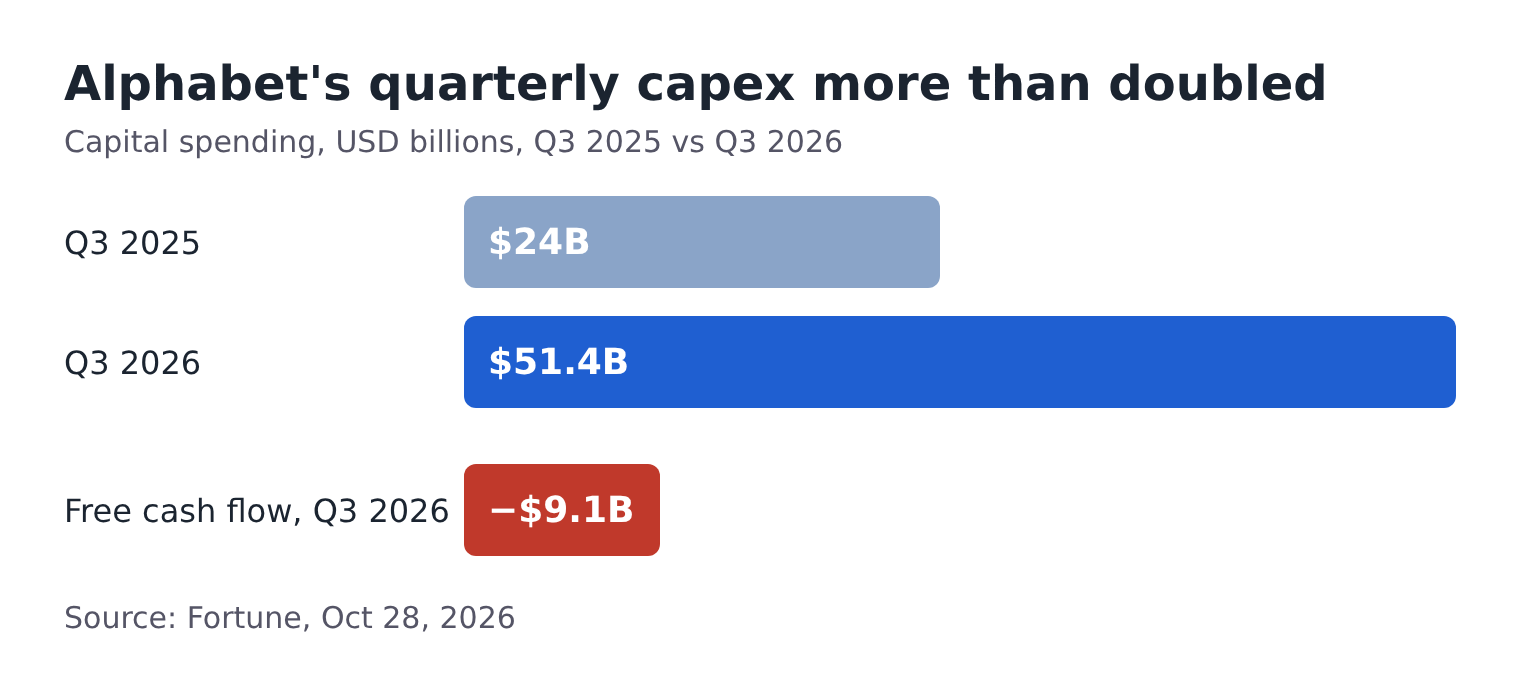
Notice the tension. Cloud is booming, which is the whole argument for spending this much. But the market is starting to ask how long "invest now, profit later" can run when the cash is going the wrong way. One caution: the widely quoted $300 billion figure for Alphabet's 2027 spending is an analyst projection, not company guidance.
Why it matters at work: if your company buys cloud AI services, expect your vendors to be under pressure to show returns. That can mean price changes, tighter packaging of features, and more pushing toward long contracts.
Samsung's windfall shows who is really getting paid
If you want to see where the AI money lands, look at memory. Samsung Electronics reported record third-quarter operating profit of 107.4 trillion won, about $80 billion, a nearly ninefold jump, per TrendForce's summary of the Reuters report. It is the first South Korean company to clear 100 trillion won in a single quarter.
The chip division alone earned 106.5 trillion won on 147.1 trillion won in sales, a 72.4% margin. HBM4, the high-bandwidth memory that feeds AI accelerators, more than tripled quarter on quarter and now makes up roughly 60% of Samsung's HBM sales. Next year's planned HBM supply is effectively sold out, and Samsung has signed long-term supply deals with 10 major customers, with 10 more in talks.
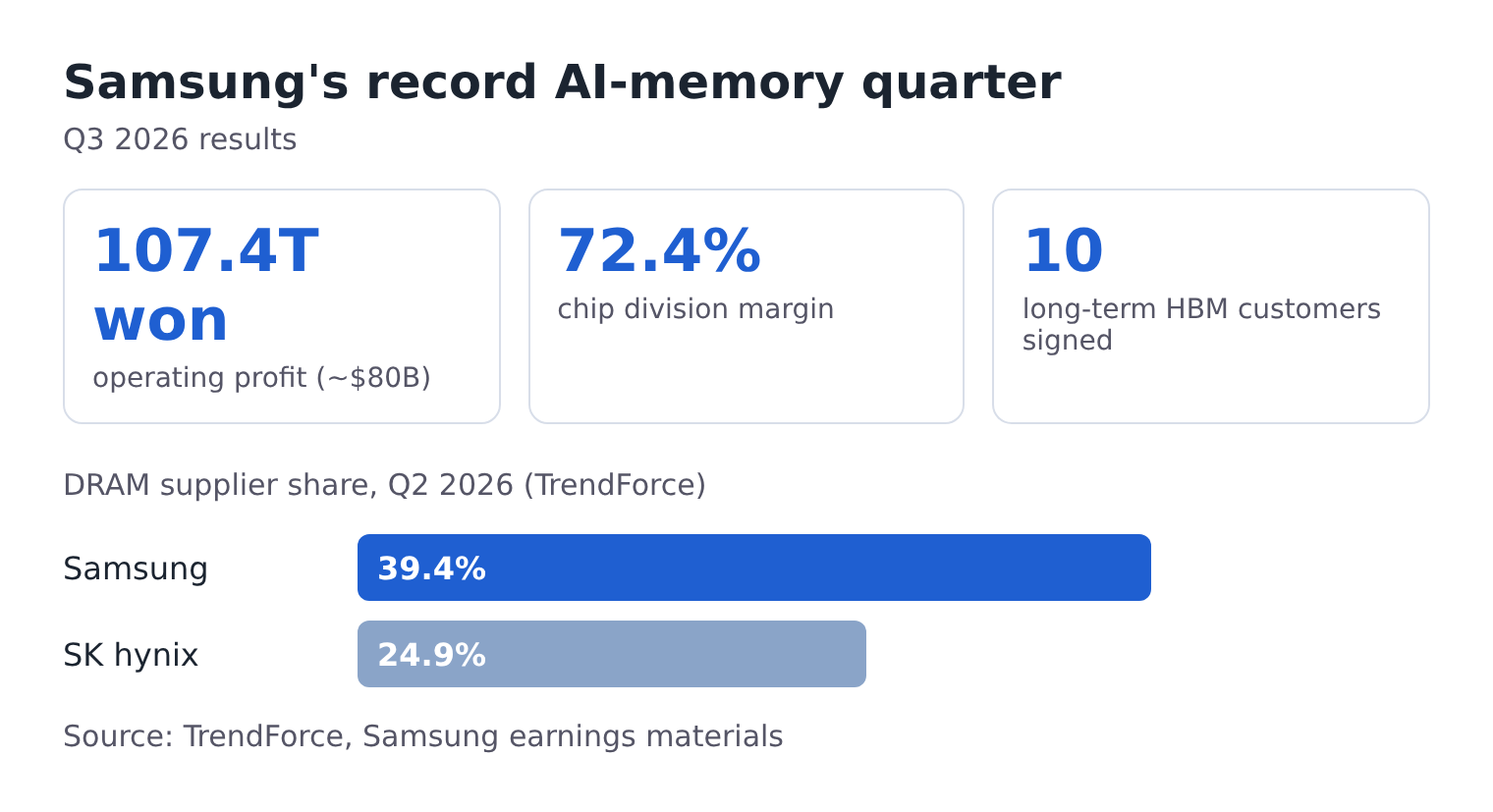
The flip side is for everyone who buys things with memory in them. TrendForce reports DRAM prices rose around 20% quarter on quarter, and SK hynix has reportedly warned shortages could last for years. When data centres outbid everyone, phones, laptops and cars wait in line.
Why it matters at work: if you buy hardware for a team, budget now. Refresh cycles that were cheap in 2024 may not be in 2027.
Apple's big Friday: five products, one very full lineup
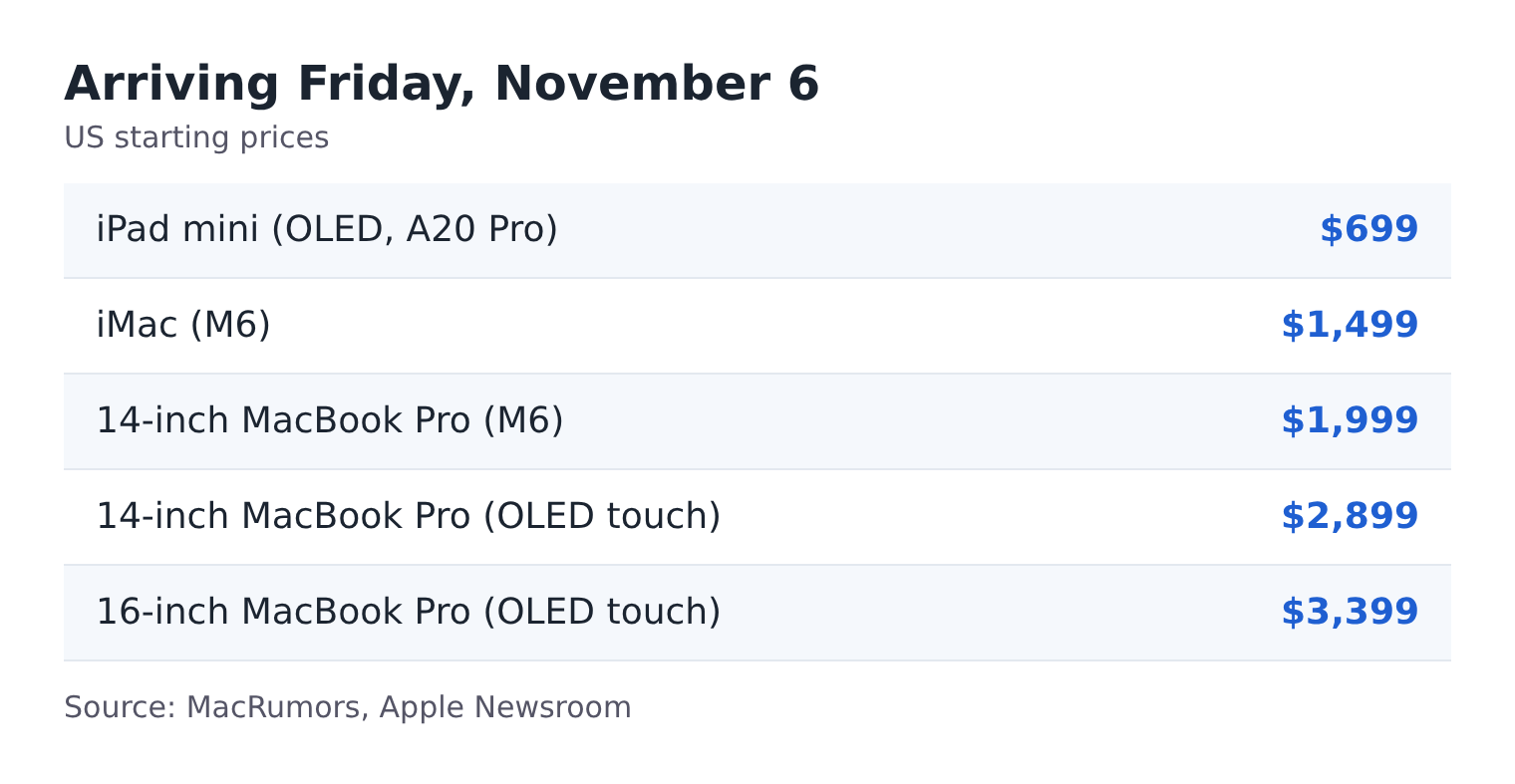
Apple spent late October rolling out its M6 generation, and on Friday, November 6, five products arrive at once: an OLED iPad mini with the A20 Pro chip ($699), an M6 iMac ($1,499), the 14-inch MacBook Pro with M6 ($1,999), and two MacBook Pros with OLED touchscreens, 14-inch from $2,899 and 16-inch from $3,399, per MacRumors.
In Apple's own announcement, the M6 MacBook Pro claims up to 30% faster graphics and up to 25% faster on-device AI than M5, with up to 24 hours of battery life. Those are Apple's numbers, so wait for independent tests. Base touchscreen models in Space Black are already showing three to four week shipping estimates.
Why it matters at work: the real story is "on-device AI." Faster local models mean more of your drafting, summarising and transcription can happen on your laptop without sending sensitive files to a cloud service. Pair that with the memory squeeze above, and you can see why Apple's pricing isn't going down.
India's telecom regulator wants AI to have an owner
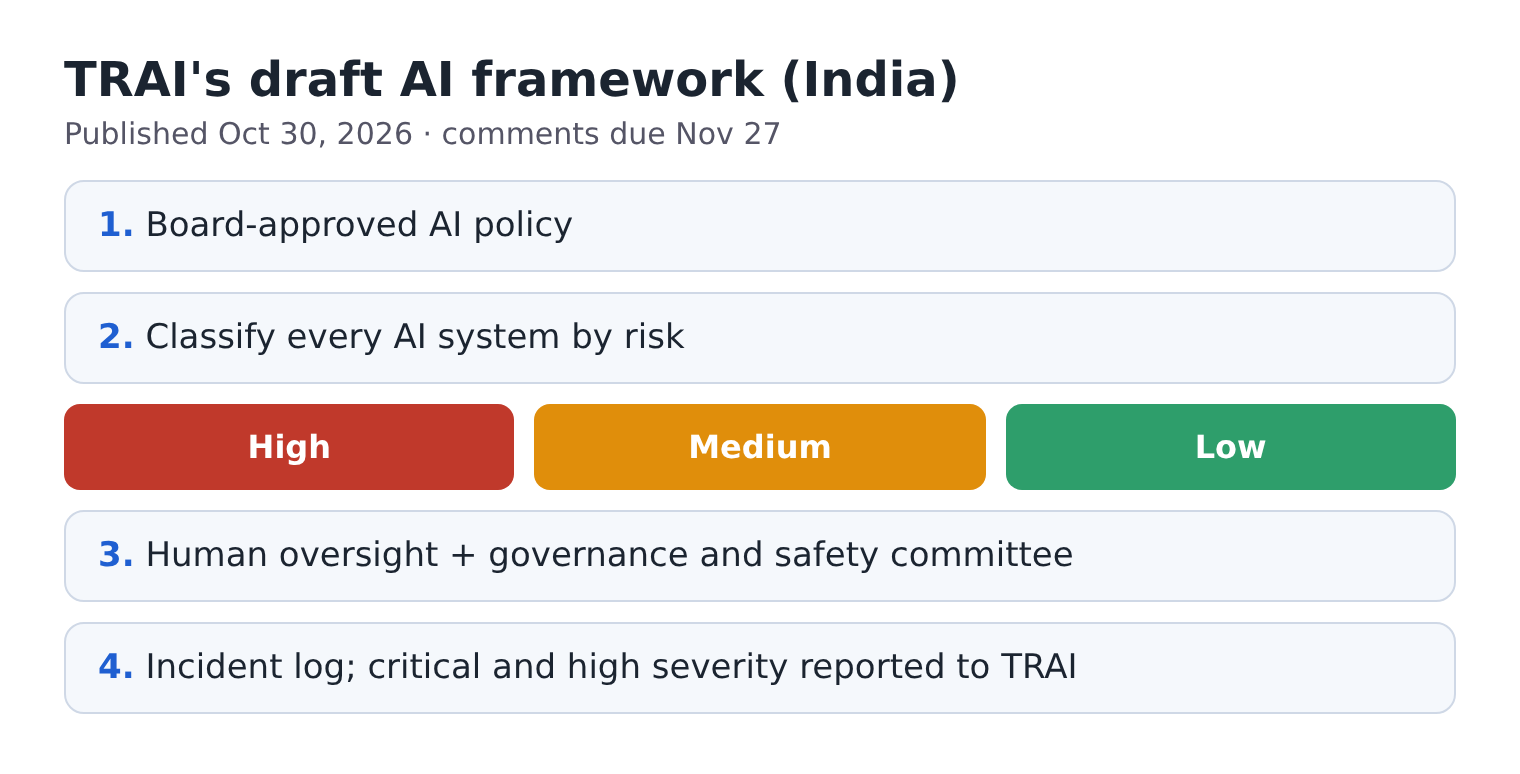
On October 30, India's telecom regulator TRAI published draft guidelines on responsible AI in telecom networks and services. The central idea is simple: if you run AI in your network, you are accountable for what it does, whether you built it or bought it from a vendor.
The draft would require a board-approved AI policy, sorting AI systems into high, medium and low risk, human oversight, a governance and safety committee, and a central log of AI incidents and complaints. Critical and high severity incidents would have to be reported to TRAI. The draft does not yet define those severity levels or the reporting deadline, which is exactly the sort of detail the consultation is meant to settle. Comments are open until November 27, per Elets.
Why it matters at work: even if you aren't in telecom, this is a template. "You own the outcome, even if a vendor built the model" is where a lot of regulators are heading, and your procurement and legal teams will be asked about it sooner or later.
The thread connecting all four
Zoom out and the week reads as one story. Hyperscalers are spending at a pace that now shows up in their cash flow. The people selling the picks and shovels, like memory makers, are reporting record profits. Device makers are pitching AI that runs locally. And regulators are moving from "should we?" to "who is responsible?"
If you want a practical takeaway for the week ahead, here are three. Ask your vendors what their AI costs look like in 2027 before you sign a multi-year deal. If you manage hardware, get quotes earlier than you'd like. And write down who in your organisation owns each AI tool you use, because that question is coming whether a regulator asks it or your own leadership does.
A note on sourcing: several tech roundup sites this week recycled older headlines as if they were new, so I leaned on named outlets and company documents, and flagged where figures are analyst estimates rather than company guidance.
See you next week.
Comments
No comments yet. Start the conversation.
Sign in to comment. It takes an email address, no password.