Why Google Offers 50% Off While ChatGPT Won’t Budge: The Open Secret Behind the AI Subscription War
本文以英文撰寫。閱讀中文版
收聽這篇文章 · 9 分鐘
由合成語音朗讀。
One company sells AI to keep you inside its empire. The other sells AI because AI is the empire. That difference explains every price tag you saw this week.
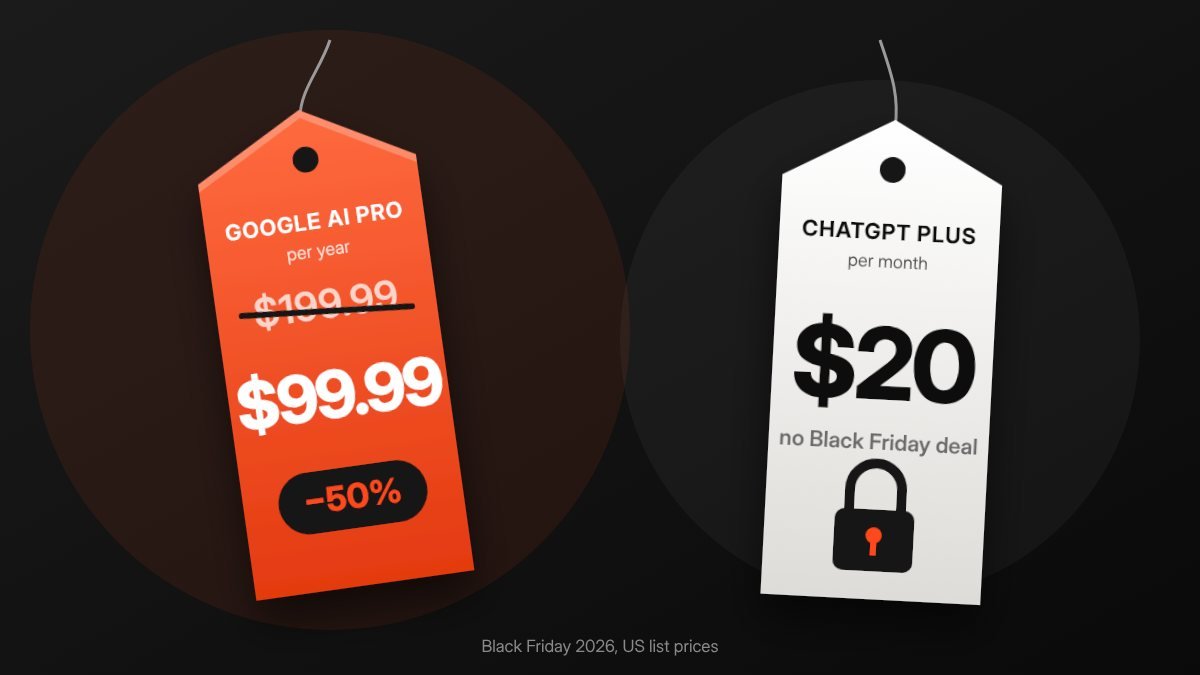
Last week a lot of people opened the Google One app to check a storage bill and found something they hadn’t seen before: a Black Friday banner offering a year of Google AI Pro for about $100 instead of $199.99. From November 20 to 26, anyone already paying Google for an AI plan or Google One storage could get up to half off Google AI Plus and the annual AI Pro plan. Vikas Kansal, who runs Gemini subscriptions at Google, announced it on X, and a round for new customers is due to start today, November 27. The deal wasn’t only American. In the Czech Republic, upgrading to AI Pro dropped from 5,500 koruna to 2,750.
Now open ChatGPT. Plus is still $20 a month, billed monthly, with no annual option and no holiday banner. Claude and Grok are the same: no Black Friday deal on their pricing pages (Claude does sell a year of Pro for $200, but that’s a standing price, not a sale).
So why would one of the richest companies on earth cut its price in half, while the company that made “chatbot” a household word won’t move a cent? It isn’t generosity, and it isn’t stubbornness. It’s two very different businesses selling what looks like the same product.
Google is spending ad money, not AI money
Look at what Alphabet reported on October 28. Revenue for July through September came to $127.6 billion, up 25% on a year earlier. Operating income was about $40.6 billion. In one quarter. Google Cloud revenue more than doubled, up 103%. And the Gemini app passed one billion monthly users, up from 650 million a year before.
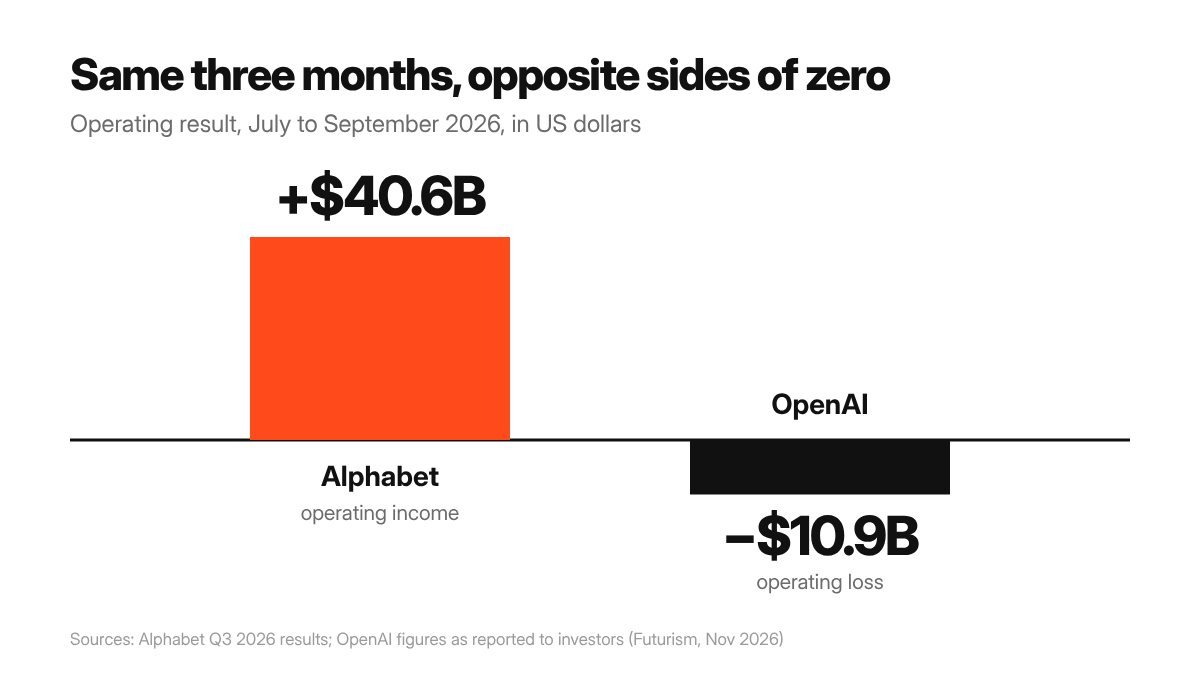
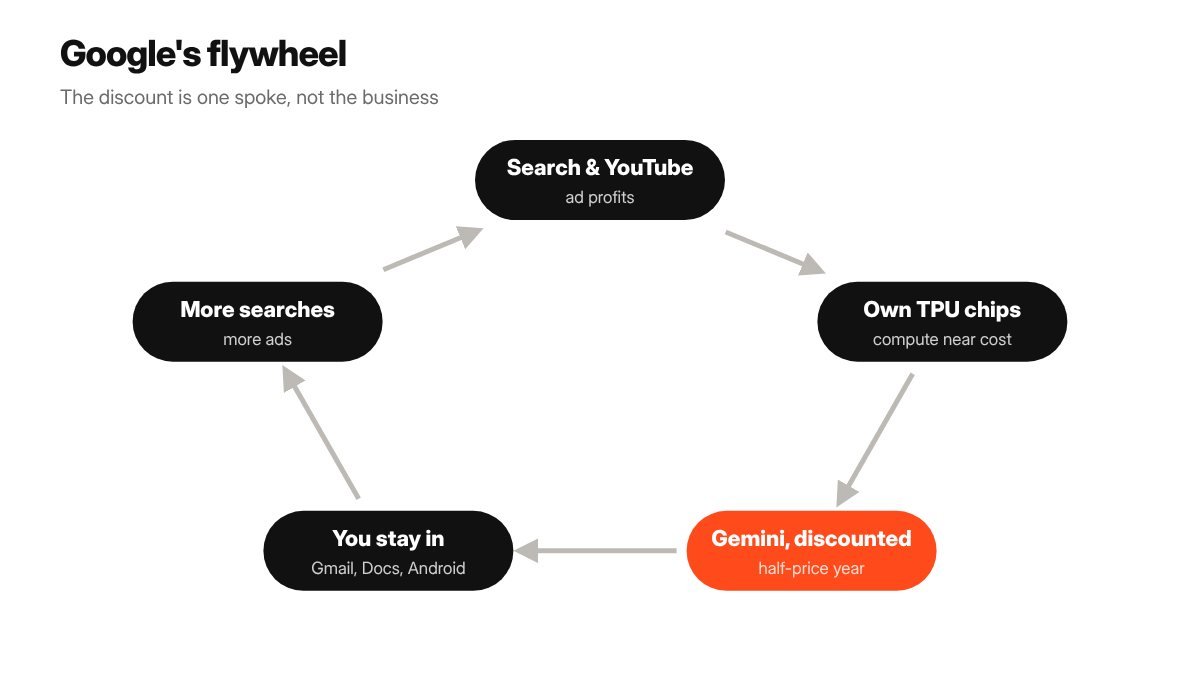
Google doesn’t need Gemini subscriptions to pay its bills. Search ads do that. Gemini has a different job: keep people asking Google instead of someone else, keep them in Gmail, Docs, Photos and Android, and keep that storage plan renewing every month.
Look at who got the discount first. Not new customers. Existing subscribers, and only on annual plans. That’s a retention move dressed up as a sale. A person who prepays for twelve months is a person who won’t drift to a competitor in March when a shinier model comes out. Half off sounds generous. It also buys Google a year of your habits.
Then there are the chips. Google designs its own AI processors, called TPUs, and runs them in its own data centers. Everyone in this race pays for computing power, but Google pays something closer to cost, and it rents the spare capacity to other companies. On the earnings call Sundar Pichai said demand for its TPU systems was strong across a wide range of customers. When you own the factory, giving away a few products is cheap.
OpenAI sells the product, and every user costs money
OpenAI sits in the opposite chair. ChatGPT isn’t a feature attached to something bigger. It is the business. Sacra estimates OpenAI reached about $50 billion in annualized revenue by September, up from $2 billion in 2023. In early November its consumer product lead said ChatGPT had 1.2 billion weekly users.
The catch is that costs grow with use. OpenAI told investors its operating loss for the third quarter topped $10.9 billion, up from $10.1 billion the quarter before. For 2025 it reportedly lost around $21 billion on about $13 billion in revenue. With normal software, the hundred-millionth customer costs almost nothing to serve. With AI, every question runs on chips someone paid for and electricity someone is still paying for. More users can mean bigger losses, not smaller ones.
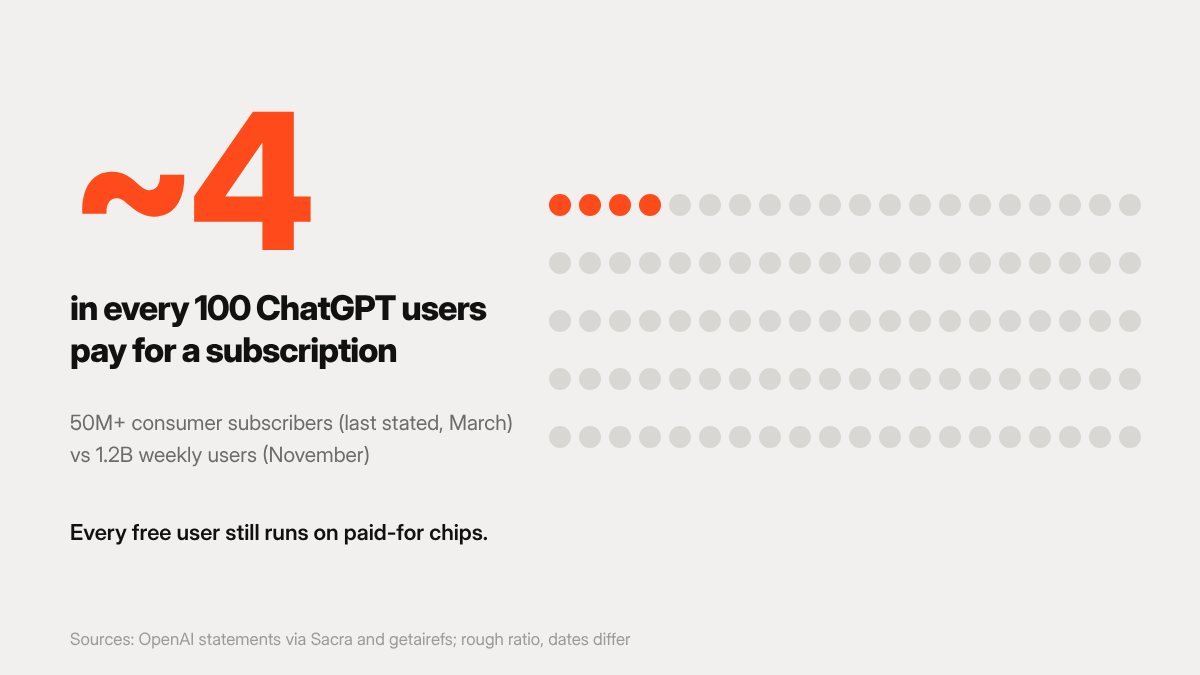
And OpenAI’s real shortage isn’t customers. It’s capacity. CFO Sarah Friar has said she spends a lot of her time hunting for any spare computing power she can find this year, and that the company is turning down opportunities because it doesn’t have enough. If you’re rationing chips, a half-price sale is the last thing you want. It would pull in exactly the heavy users who cost the most to serve, at the moment you can least afford them.
Why $20 is a line OpenAI won’t cross
There’s a quieter reason too. Twenty dollars a month has become the default price of “serious” AI. ChatGPT Plus, Claude Pro and Gemini’s monthly AI Pro all sit around it, and OpenAI is the one that set the number. Cut it once, even for a weekend, and every future buyer learns that the real price is $10 if you wait for November. Discounts train customers to wait.
So OpenAI discounts a different way. Instead of lowering the price of Plus, it built cheaper doors. ChatGPT Go costs $8 a month and, like the free tier, shows ads. Sam Altman once called ads a last resort; they’ve been live since February. At the other end, Pro plans run from $100 to $500 a month for the people who burn through the most compute. The message is simple: if you want it cheaper, you pay with your attention, not with a coupon.
Google cuts the price. OpenAI slices the product. Both want more of your money and your time. They just start from very different bank balances.
The open secret
Put it together and the secret isn’t much of a secret. AI subscriptions aren’t priced on what the AI is worth. They’re priced on who pays for the chips.
Google can afford to subsidize because Search, YouTube and Cloud throw off enormous profits, and AI makes all three stickier. Microsoft plays a similar game by folding Copilot into Microsoft 365. OpenAI, and smaller labs like Anthropic, have to make the AI itself pay for itself, sooner or later. For one side, the subscription is bait. For the other, it’s the meal.
We’ve seen this film before. Ride-hailing, food delivery and video streaming all ran on cheap prices paid for by investors or a parent company, right up until the market settled and the prices went up. A subsidized price is a promotional price with better PR. The $100 Gemini year is real. So is the renewal at full price.
What this means if you pay out of your own pocket
Check the renewal, not just the deal. Google’s offer covers the first year; the terms say the offer period starts the day you redeem it, and you can see the date in your subscriptions page. Put a reminder in your calendar.
Buy the ecosystem, not the discount. If your work already lives in Gmail, Docs and Drive, half-price Gemini is a genuinely good deal. If your drafts, code and habits live in ChatGPT, a cheaper tool you won’t open is the most expensive one you own.
Look at your own country’s price. These plans are priced locally, and the Czech numbers above show how much the gap can be. Students often get a free year somewhere, too.
And treat annual plans as a bet. Paying monthly costs a bit more but lets you leave. In a market where the best model changes every few months, a year is a long time to be locked in.
My take
Here’s where I land. I don’t think the cheapest tool wins this war; I think the stickiest one does. Google’s 50% off isn’t really a price, it’s an invitation to stop shopping around, and I’d only take it if I already lived inside Google’s apps. OpenAI’s refusal to discount tells me something as well: it’s betting ChatGPT is good enough that people will pay full price, and it’s running out of chips before it runs out of buyers. That’s a good problem to have, but an expensive one, and someone eventually pays for expensive problems. As a working person, my plan is to stay a little uncommitted. Pay monthly, keep two assistants in rotation, and let these companies keep competing for me instead of locking myself in for a year because a banner said “half off.” The day one of them no longer has to compete is the day today’s $20 starts to look cheap.
Sources: Google AI Pro Black Friday offer (Yahoo Tech, Sulat, whichaitopay.com, World Today Journal, Nov 2026); Alphabet Q3 2026 results (9to5Google, PPC Land); OpenAI revenue and users (Sacra); OpenAI Q3 losses and ads (Futurism, Nov 12 2026); OpenAI 2025 results (TechSpot); OpenAI compute shortage (Business Insider via AOL).
每週一封信,收到 NeatRead 的精選文章
每週一封,不需要密碼,隨時可以取消訂閱。
或使用電子郵件繼續
使用電子郵件時,我們會寄登入連結給你。
留言
還沒有留言。來開啟話題吧。
登入後即可留言。只需要電子郵件,不用密碼。